
Custom Corporate Gift Backpacks with Embroidery: What You May Actually Spend, and Who Pays Tax on the Rest

Rewritten 11 August 2026 — rebuilt on the Internal Revenue Code, HMRC's manuals, the Einkommensteuergesetz, the Code général des impôts and six published contract-decoration price lists. Three embroidery specifications were wrong, the decoration pricing was low by more than a factor of two and a half even at the top of its band, the price ladder was unsourced and is withdrawn, and the tax dimension that decides whether any of this is deductible was missing entirely.
A note on who wrote this. The previous version told buyers to expect $35 to $80 per unit at a minimum order of 500. That band is why this rewrite exists. In every market this page's readers operate in, a gift at that price is over the statutory ceiling — over the US $25 limit by a wide margin, over the UK £50 and German €50 across most of its range, and over the French €73 at the top of it. No exchange rate is applied and none is implied: each figure reads in its own currency. We recommended a price band that puts our own customers outside the relief they were presumably buying the gift to get.
Two corrections cost us. First that band, withdrawn along with three other numbers that had no source behind them either — "lasts 5+ years", "personalisation adds $1.50 to $3.00" and "drop-ship adds $4 to $8". Second the decoration price of $0.20 to $1.40 per unit, when every published Western rate card charges more than two and a half times the top of that band to put a logo on a bag.
This is the fifth article in a row in which an unsourced price ladder has been withdrawn. At some point that stops being a run of errors and becomes a description of how the pages were written. It was.
Every corporate gifting page in this category is written as a decoration brief: thread colour, stitch count, placement, minimum order, lead time. Ours was too. Not one mentions that a branded backpack at the price they recommend is, in the United States, above the deductible ceiling from the bottom of the recommended band up; that in the UK, Germany and France crossing the equivalent line costs the whole deduction rather than the excess; or that in the UK the embroidery is not a branding decision but the condition the deduction depends on.
Three things below will change a programme: where the line is in each market, what crossing it costs, and why the logo has to be on the bag and not the box — one sentence in an HMRC manual that rules out the branded packaging most gifting suppliers sell as an upgrade. Then the specifications, because a reader who fixed the tax and kept our specs would still get a bad bag.
The three thresholds your programme has to sit under
There is no single corporate gift limit. There are several, they do not agree, and in the United Kingdom three run at once on three different bases.
| Market | Ceiling | Provision | Period | Measured |
|---|---|---|---|---|
| United States | $25 | IRC §274(b)(1) | Per recipient, per year | Cost, excluding incidental costs |
| United States | $4 or less | IRC §274(b)(1)(A) | Outside the cap entirely | Giver's name permanently imprinted on the item |
| UK, employees | £50 | ITEPA 2003 s323A | Per benefit; £300 a year for close-company directors, s323B | VAT-inclusive |
| UK, clients | £50 | CTA 2009 s1300; ITTOIA 2005 s47 | Per person, per accounting period | Cost; needs a conspicuous advertisement |
| UK, VAT | £50 | VATA 1994 Sch 4 para 5(2)(a) | Per person, rolling 12 months | VAT-exclusive |
| Germany, gifts | €50 | EStG §4 Abs. 5 S. 1 Nr. 1 S. 2 | Per recipient per Wirtschaftsjahr, aggregated | Net of recoverable VAT, §9b |
| Germany, employees | €50 | EStG §8 Abs. 2 S. 11 | Per employee per calendar month | All non-cash benefits together |
| Germany, occasions | €60 | R 19.6 Abs. 1 LStR | Per personal occasion, on top of the monthly €50 | Value of the benefit |
| France | €73 TTC | CGI annexe IV art. 28-00 A | Per object per year, same beneficiary | TTC; packaging and postage inside |
| Netherlands | None reaching a gift of this kind | Wet LB 1964 art. 31a | Payroll-wide annual budget | 2026: 2.00% of the first €400,000 of fiscaal loon, 1.18% above |
No two measure the same thing. The German €50 is net of recoverable VAT under §9b, so at the 19% German standard rate a VAT-registered buyer may spend €59.50 gross and stay inside while a VAT-exempt buyer — an insurer, a clinic — may not. France counts carriage and packaging in; the US leaves them out.
The United Kingdom runs three separate £50s and they do not net off: trivial benefits at £50 including VAT per benefit; client gifts at £50 per person per accounting period with an advertising condition; VAT at £50 excluding VAT over a rolling twelve months.
A backpack at £50 excluding VAT sits exactly on the VAT threshold without exceeding it, and fails the trivial-benefits test the moment VAT is added, because £60 inclusive is £10 over a VAT-inclusive £50. Working back from £50 including VAT at 20% gives £41.67 excluding VAT as the real ceiling on an employee gift — covering the bag, the decoration and, on a point nobody has resolved, possibly the packaging and postage too.
Flag: no single HMRC page states these three regimes are separate. That is our reading of the statutes side by side, not a citation.
The Netherlands has no per-gift ceiling that reaches a corporate backpack — the one per-gift figure it does have, €25 including VAT for a personal attention such as flowers under the kleinegeschenkenregeling, does not extend to a Christmas or onboarding gift. What is left is the werkkostenregeling free space: untaxed inside it, an 80% eindheffing above it, paid by the employer. The Dutch question is never whether the gift is under the limit but how much of the annual budget has gone.
The $25 that never moved
The US ceiling is the oldest number here and the most misquoted, because it no longer looks like a real figure. It is the operative amount in IRC §274(b)(1), enacted by the Revenue Act of 1962, Pub. L. 87-834 §4(a)(1), 76 Stat. 974, and never amended. Section 274 contains no inflation provision, so there is no mechanism by which it could have moved.
| Figure | Provision | Set by | Indexed | June 2026 money |
|---|---|---|---|---|
| $25 gift ceiling | IRC §274(b)(1) | Revenue Act of 1962, Pub. L. 87-834 §4(a)(1), 76 Stat. 974 | No — §274 has no inflation provision | $276.45 |
| $4 promotional carve-out | IRC §274(b)(1)(A) | Same Act, 1962 | No | $44.23 |
| $400 achievement award | IRC §274(j)(2) | Tax Reform Act of 1986 §122(d), awards after 31 Dec 1986 | No | $1,176 |
| $1,600 all awards | IRC §274(j)(2) | Same Act | No | $4,704 |
| £50 UK client gifts | CTA 2009 s1300 | Finance Act 2001 s73, from £10, periods from 1 April 2001 | No — an unused Treasury power | Not computed |
| £50 UK VAT gifts | VATA 1994 Sch 4 para 5(2)(a) | SI 2001/735, from £15, 8 March 2001 | No | Not computed |
| €50 Germany | EStG §4 Abs. 5 | Wachstumschancengesetz, BGBl. 2024 I Nr. 108, from €35, years from 2024 | No, but it moved in 2024 | Not computed |
| €73 TTC France | CGI annexe IV art. 28-00 A | In force since 12 June 2021 | Yes — five-yearly, indexed to prices excluding tobacco | Not computed |
The 2026-dollar column is our arithmetic, not an official figure and not output from the BLS inflation calculator, which was unreachable. Method: published CPI-U index values, US city average, all items, not seasonally adjusted, 1982-84 = 100; 1962 = 30.2, 1987 = 113.6, June 2026 = 333.952. So 25 × (333.952 ÷ 30.2) = $276.45; anchoring to 1963 gives $272.84. The award figures run from 1987, the first annual average after the effective date.
France is the only jurisdiction here with an indexation mechanism. The UK Treasury holds a power to raise the client-gift figure by order and has not used it in 25 years.
The $4 carve-out is the most under-used provision in US gifting. §274(b)(1)(A) lifts an item out of the $25 cap entirely if it costs $4 or less, carries the giver's name "clearly and permanently imprinted", and is "one of a number of identical items distributed generally". Indexed it would be worth $44.23; unindexed it covers almost nothing. Note what it requires: the giver's name, permanently imprinted, on the item — the same structural condition the UK imposes at £50, and the theme of this article.
There is no US de minimis dollar threshold. Treas. Reg. §1.132-6 defines a de minimis fringe as property whose value is "so small as to make accounting for it unreasonable or administratively impracticable"; the only dollar figures in it are transportation-specific, the operative one being a $21 monthly transit pass at §1.132-6(d)(1). Any figure quoted as "the IRS de minimis threshold" is not traceable to the regulation.
And a gift card is never the answer. Treas. Reg. §1.132-6(c) and Pub. 15-B: gift certificates and gift cards, "no matter how little, are never excludable as a de minimis benefit." UK trivial benefits exclude cash vouchers; German Aufmerksamkeiten are benefits in kind. The advantage belongs specifically to physical goods — the strongest structural argument for a branded object there is, and one nobody in this category makes.
The cliff edge, and why a US-trained buyer walks off it
A buyer whose instincts formed in the United States has learned that $25 is a taper: spend $60, deduct $25, lose $35. The statute denies the deduction only "to the extent that such expense … exceeds $25", which makes overspending a pricing decision. That instinct is wrong everywhere else in this article.
| Market | Line | What you lose | Provision |
|---|---|---|---|
| United States | $25 per recipient per year | Only the excess. A $60 bag keeps $25, loses $35 | IRC §274(b)(1) |
| UK, employees | £50 including VAT, per benefit | Everything. "the full amount is taxable, not just the excess over £50" | s323A with EIM21865 |
| UK, clients | £50 per person per period | Everything. The exception is disapplied and the whole cost returns to s1298 | CTA 2009 s1300 Case B |
| UK, VAT | £50 excluding VAT, rolling 12 months | Everything. Output tax on "the total cost value of all the gifts" | Notice 700/7 §2.3 |
| Germany, gifts | €50 net of VAT, per recipient per year | Everything. A Freigrenze, not an allowance | EStG §4 Abs. 5 S. 1 Nr. 1 S. 2 |
| Germany, employees | €50 per calendar month, aggregated | Everything — another Freigrenze | EStG §8 Abs. 2 S. 11 |
| France | €73 TTC per object per year | Relief attaches only to objects "dont la valeur unitaire n'excède pas 73 €". Above it, nothing | CGI annexe IV art. 28-00 A |
| Netherlands | The vrije ruimte | 80% eindheffing on the excess, paid by the employer | Wet LB 1964 art. 31a |
The French row is our reading of the wording, not a quoted cliff-edge statement — and so is the German row: EStG §4 Abs. 5 S. 1 Nr. 1 S. 2 states only the condition, and the all-or-nothing consequence is our reading of the Freigrenze structure. Only the UK cliff is quoted directly, from EIM21865. EIM21865 also directs you to "use the VAT inclusive amount", and s323A Condition D requires that the benefit is not "provided in recognition of particular services performed by the employee in the course of the employment or in anticipation of such services" — anticipated services count too. Two traps sit off the table: a gift routed through a company to a named person is that person's gift (Pub. 463), and packaging and postage count inside the French €73.
In a cliff jurisdiction the price of the bag is a compliance parameter, not a budget parameter. In the US you can spend $60 and accept a $35 disallowance. In the UK or Germany there is no equivalent trade: at £50.01 including VAT the entire £50.01 becomes taxable earnings, and at €50.01 net the whole German expense becomes non-deductible.
Germany will take the deduction away from a compliant gift for a filing error. EStG §4 Abs. 7 requires that these expenses "sind einzeln und getrennt von den sonstigen Betriebsausgaben aufzuzeichnen" — recorded individually and separately from other operating expenses. That is a condition of the deduction. A €40 bag, correctly under the Freigrenze and correctly documented as to recipient, loses its deductibility entirely if it was booked to a general marketing account rather than a separate gift ledger. No supplier can fix this, no specification decision affects it, and it is invisible until an audit.
The aggregation periods differ too: per recipient per year in the US, per Wirtschaftsjahr in Germany, per object per year in France, per benefit in the UK.
The embroidery is what makes it deductible
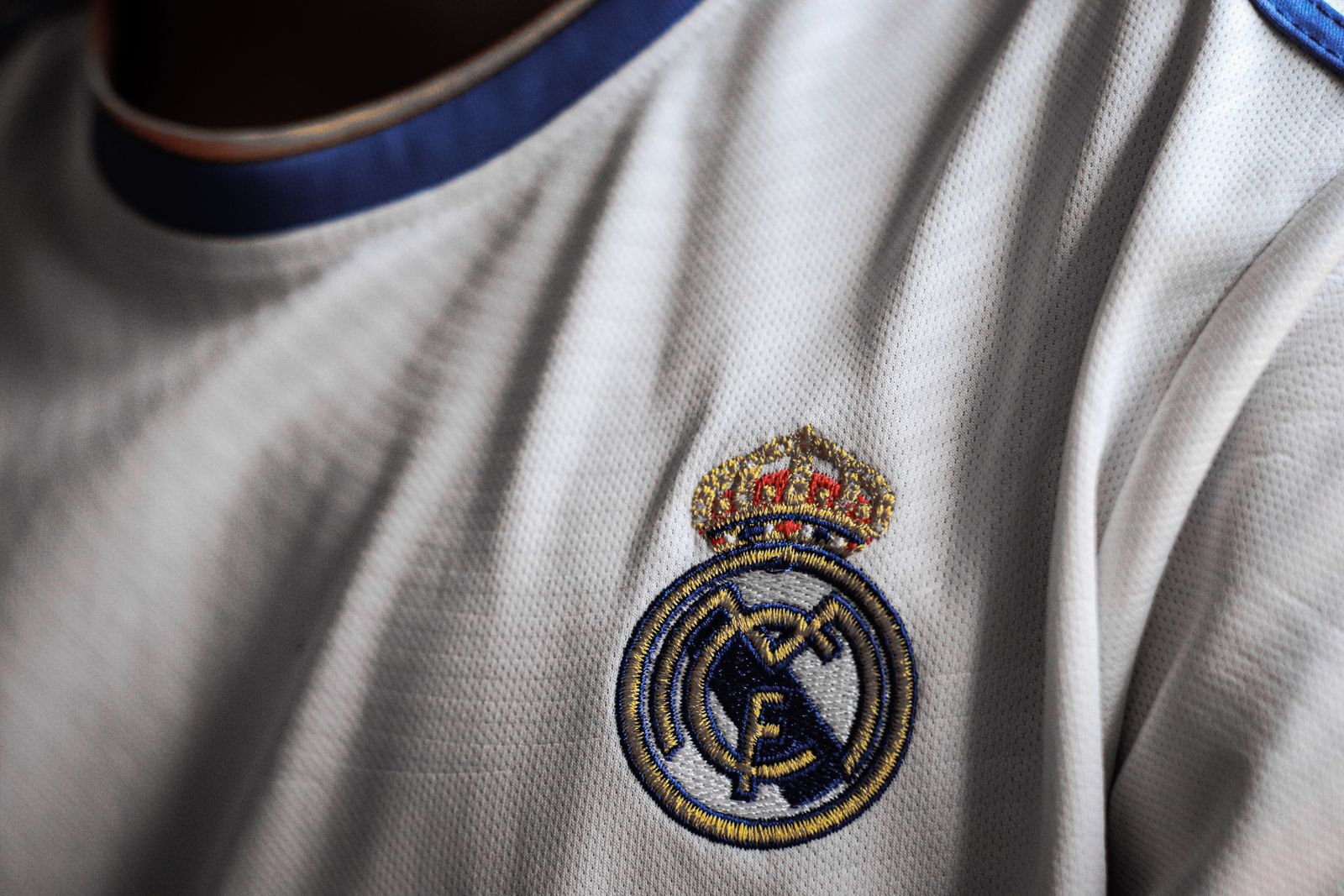
The UK allowance for client gifts at CTA 2009 s1300 Case B, and its income-tax twin at ITTOIA 2005 s47, is not a general small-gifts relief. It applies only where the gift "incorporates a conspicuous advertisement for the company"; business gifts are otherwise disallowed outright under s1298 as entertainment. The advertisement is the entire basis of the exception. And HMRC's BIM45070 says where it must be: "on the gift itself, and not just on the wrapping".
Read that against how corporate gifting is normally sold. The standard upsell is a branded gift box, branded tissue, a branded mailer, a printed card, a ribbon. Every one is wrapping. A plain bag in a beautifully branded box is, on HMRC's own wording, a gift with no conspicuous advertisement on it — outside the s1300 exception whatever it cost.
The embroidered logo is the advertisement. It is not a finishing touch, it is the reason the gift is deductible, and the £3 to £6 of stitching is the line the relief hangs on.
The United States runs the same idea at a different scale: §274(b)(1)(A) lifts an item out of the $25 cap only where the giver's name is "clearly and permanently imprinted" on it. Two tax systems, drafted sixty years and an ocean apart, both put the mark on the object rather than the packaging.
| Where the mark sits | On the gift itself? | Basis |
|---|---|---|
| Embroidered logo on an exterior panel | Yes | On the gift, conspicuous, permanent |
| Label sewn outside, visible in use | Our reading: yes | On the gift, but "conspicuous" is a size judgement HMRC does not address |
| Label inside a pocket or under a flap | Our reading: doubtful | On the gift, but not conspicuous in ordinary use |
| Branded gift box, sleeve or case | No | BIM45070 — "not just on the wrapping" |
| Branded tissue, ribbon, mailer, carton | No | All wrapping |
| Printed card or insert in the box | No | Travels with the gift rather than being on it |
| Swing tag the recipient removes | Our reading: no | Attached to rather than part of the gift |
| Food, drink or tobacco | No | Excluded from Case B by name |
| A voucher or gift card | No | Excluded from Case B; never a US de minimis fringe; excluded by s323A Condition A |
Three rows are marked as our reading. BIM45070 gives one sentence and the statute gives one word, "conspicuous"; everything between those and a specific piece of trim is interpretation. We would rather show where the citation stops than imply nine sourced rulings where there is one manual page.
So: in UK client gifting the logo goes on the bag, somewhere visible in use, and the packaging budget buys presentation but nothing in tax. UK employee gifting under s323A has no advertising condition — but Condition D does apply. A bag given to everyone at Christmas is fine; the same bag given to whoever closed the quarter is not a trivial benefit, and its whole value is taxable.
The structure nobody sets up deliberately
IRC §274(b)(1) does not define "gift" as anything you give somebody. It defines it by reference to §102 — a gift, here, is an item excludable from the recipient's gross income under §102. And §102(c)(1) provides that §102(a) "shall not exclude from gross income any amount transferred by or for an employer to, or for the benefit of, an employee." So an employer-to-employee transfer is not a "gift" within §274(b), and the $25 cap does not reach it at all. A fully taxable employee award escapes the ceiling and is deductible as compensation. The cost is the employee's, in tax on the value — but the choice between a $25 bag and a $150 bag taxed and deducted in full is a live one, and it is not the choice this category ever presents.
| Structure | Provision | What it buys | What it costs |
|---|---|---|---|
| US taxable employee award | §274(b)(1) with §102(c)(1) | The $25 cap does not apply; deductible as compensation | The employee is taxed on the full value |
| US achievement award | IRC §274(j)(2) | $400 per employee per year, non-qualified plan | Tangible personal property only; §274(j)(3)(A) excludes cash equivalents and gift cards at clause (i), and vacations, meals and tickets at clause (ii) |
| All awards combined | §274(j)(2); §74(c)(2) | $1,600 per employee per year | Above the deductible amount the employee has gross income |
| US de minimis fringe | Treas. Reg. §1.132-6 | No dollar ceiling in the regulation | Nothing to point at in an audit; a backpack is not a candidate |
| German §37b | EStG §37b Abs. 1, Abs. 3 | A 30% flat tax makes the benefit tax-free for the recipient | Base is expenses "einschließlich Umsatzsteuer", plus solidarity surcharge and church tax |
| The §37b trap | BMF 19.05.2015, Rz 26 | Nothing | If the gift was over €50, the tax paid on it is non-deductible too — roughly 139% of invoice |
| §37b ceiling | EStG §37b Abs. 1 S. 3 | — | Excluded above €10,000 per recipient per year, or per gift |
| Streuwerbeartikel | BMF 19.05.2015, Rz 10 | Items at €10 or less sit outside §37b | €10 buys a pen |
| UK close-company directors | ITEPA 2003 s323B | — | £300 a year, covering family, household, former directors |
Two flags. The ~139% is an approximation from named components — 30% on a VAT-inclusive base, plus a solidarity surcharge whose rate we have not sourced, with the tax itself non-deductible — not a BMF figure. And §37b Abs. 3: "Der Steuerpflichtige hat den Empfänger von der Steuerübernahme zu unterrichten". You must tell the recipient you have paid the tax. Two further ceilings sit outside this table: the Dutch vrije ruimte, with its 80% eindheffing above, and the French relevé de frais généraux, which requires gifts totalling over €3,000 in a year to be declared.
Every route above the ceiling is paid for either by the recipient in tax or by you at a rate above 100% of the invoice. The German case is starkest: the gift becomes tax-free for the recipient, but if it breached €50 you are paying a non-deductible tax on a non-deductible expense. Nothing here lets a €120 bag reach a German contact cheaply.
What decoration actually costs
We published $0.20 to $1.40 per unit for embroidery and $80 to $120 for setup — wrong in opposite directions, the tell that they came from two places and were never reconciled. The per-unit figure traces to Asian in-line branding: a Ningbo bill of materials published in February 2026 for a 25-litre laptop backpack at 2,000 units gives "Custom Branding" at typically $0.2 to $1 a unit inside an FOB price of $15.80. Real number, real context, wrong job — and the one hard figure inside it, $0.40, is a three-colour silk-screen rather than embroidery.
| Decorator | Published rates | Digitising | Bag surcharge | Minimum |
|---|---|---|---|---|
|
ICS Inks undated, read 11 Aug 2026 |
Per 1,000 stitches: 12–24 pcs $1.05; 25–48 $0.65; 49–72 $0.62; 73–249 $0.58; 250–650 $0.55; 651–999 $0.52; 1,000–3,999 $0.48 | $35; lettering $15; PMS thread $7 per color | $2.00 per item, "Jumbo/Hard to Hoop" | $4.41 to $2.15 minimum; 12 pcs |
|
Wholesale West updated 13 Feb 2025 |
Base covers 1–5,999 stitches, then per extra 1,000: 10–24 pcs $5.50 / $1.00; 25–49 $4.00 / $0.60; 50–149 $3.60 / $0.50; 150–299 $3.20 / $0.40; 300–499 $2.90 / $0.35; 500-UP $2.70 / $0.30 | $49 up to 5″ × 5″ | None published | $50 minimum charge |
|
US Colorworks effective 15 Jun 2022 |
At 5,001+ pcs: under 6,000 stitches $2.82; under 8,000 $3.27; under 10,000 $3.72 | $8.00 per 1,000 stitches, $40 minimum | Bags and totes +$0.50; leather +$2.00 | $25 minimum invoice |
|
Leonard's Sloan dated 1 Mar 2024 |
Per piece by stitch bracket: 72–287 pcs $2.70–$26.00; 288–599 $2.40–$25.50; 600+ $2.20–$25.00 | $85 up to 8,999 stitches | $1.25 per piece for bags, jackets, leather, vinyl | From 72 pcs |
|
Threads Embroidery undated |
24+ pcs 75¢ per 1,000 stitches; 12–23 pcs $1.00 | "START at $25" | None published | 12 pcs |
|
Essential Workwear, UK undated |
Left chest 6,000–10,000 stitches, "around £3 – £6 per garment"; 25–49 pcs £4.00; 50+ £3.75 | £15 per logo, free over £150 | None published | From 25 pcs |
The pricing basis is not consistent between decorators. Two charge per 1,000 stitches, one a base plus a marginal rate, two a flat per-piece figure inside a stitch bracket, one a range — so you cannot compare two quotations without knowing which structure each uses. Setup across all six spans $25, $35, $40, $49, $85 and £15. Our published $80 to $120 opens just below the dearest of them and runs to well above it. The defensible published range is $25 to $85.
Stitch count is rounded up to the next thousand. An 8,100-stitch logo bills as 9,000. At 500 pieces and $0.55 per thousand that is $0.55 a unit — about 11% of the stitch charge thrown away on a hundred stitches (nearer 8% once the $2.00 bag surcharge is in the total). The fix costs nothing and happens once, at digitising. Nobody offers it; every decorator can do it.
The hard-to-hoop surcharge on bags is quoted separately or not at all — $2.00 an item, $1.25, $0.50 on the three cards that publish one. On 500 units the spread between $0.50 and $2.00 is $750, more than most buyers' entire decoration assumption. Minimum invoice and per-piece minimums then dominate small logos and short runs: a 2,000-stitch mark at ICS Inks' 500-piece rate is $1.10 of stitching, below their $4.41-to-$2.15 per-piece minimum, and Wholesale West's $50 minimum charge sets a floor under any short order. And PMS matching is billable at "$7 per color", so a three-colour mark is $21 before a stitch is sewn — and still not a guaranteed match.
Where our number actually belonged. The $0.20 to $1.40 band is roughly right for in-line branding at an Asian bag factory, a different service from contract decoration of a finished bag in the West — and we published it next to specifications about hooping finished bags. We have no published per-unit embroidery price from an Asian factory to replace it with. For Western contract decoration, the four rate cards charted above put an 8,000-stitch logo on a bag at 500 pieces at $3.60 to $6.40 — before digitising, which none of the four includes, and before any bag surcharge the cheapest of them does not publish — with the arithmetic shown so you can disagree with it.
The hooping constraint that, on our reading, sets your logo size months earlier
We published this: "most factory machines run 350mm hoops; designs over 35cm wide need rotation or splitting." It is wrong on the number — every commercial sew field we found published is larger than 350 mm — and wrong in kind, which is the part that matters. A finished bag cannot be flat-hooped: it has linings, padding, zips, seams and internal pockets in the needle path, and it goes under the needle in a clamp. The clamp is roughly 180 × 230 mm.
| Device | Published limit | Applies to |
|---|---|---|
| Tajima TMBP2-SC | 360 × 500 mm | Machine sew field |
| Tajima TMBP2-XC cylinder | 550 × 600 mm | Machine sew field |
| Barudan 2/4/6/8-head | 450 × 520 mm; narrow variants 450 × 380 mm | Machine sew field |
| ZSK RACER | Field depth 500 or 700 mm; RACER XL 700 × 700 mm per head | Machine sew field |
| Melco Fast Clamp Pro | 182 × 229 mm, maximum thickness 5.8 mm; sold for "backpack pockets, duffel bags" | Finished bag, clamped |
| Ricoma Manual Robot Frame | 10.5″ × 9″, usable width around 6.5″ after arm interference; sold for "shoes, bags, wallets" | Finished bag, clamped |
| What we published | "350 mm hoops; over 35 cm needs rotation" | Withdrawn — below every sew field, about double every clamp width |
Tajima classes the tubular frame as the "standard frame for cylinder type machines" and sells separate clamp frames for thick materials. Erich Campbell describes bags as containing "supports, zippers, pouches and seams that get in the way of hooping and stitching" and recommends "alternate hooping methods like clamping and adhesive backing". On a finished backpack the clamp is the normal method.
The inference, marked as an inference. If a finished bag is limited to roughly 180 × 230 mm by the clamp, a bag decorated during manufacture — while the front panel is a flat cut piece with no lining, padding, zip or seam in the way — has the full 360 to 700 mm field. On that reading, choosing between in-line decoration and buying blanks to decorate afterwards silently sets your maximum logo size, months before anyone opens a design file.
We could not source it directly. No manufacturer publishes a backpack-panel fixture size, and no factory document could be found stating that panels are embroidered before assembly. The clamp evidence is published and quoted; the pre-assembly conclusion is ours. Put it to your supplier as a question, not as a citation.
Either way: ask, before the artwork is drawn, which of the two you are buying. If it is post-assembly, design to roughly 180 × 230 mm and check thickness — Melco publishes 5.8 mm at the clamp, and a padded, laminated laptop panel is not obviously under that.
Three specifications we published that were wrong
The hooping error above is one of three. The other two sit in the part of the page that looked most authoritative, which is generally where these things live.
| We published | The sourced figure | Why that is the real number | What ours costs you |
|---|---|---|---|
| "Stitch density: 4–4.5 stitches per mm" | Density is spacing in millimetres, or points at 0.1 mm each. Embrilliance puts satin columns at "4 points to 5 points"; Emborado and a published 0.25–1.05 mm test both land on 0.35–0.45 mm | The trade does not use stitches per millimetre, and a smaller number means denser. Our arithmetic: 0.35–0.45 mm is about 2.2 to 2.9 lines per mm; ours implies 0.22–0.25 mm, 1.6 to 2 times too dense | "Puckering, thread breaks, looping, or fabric show-through"; penetrations that "damage the fabric" and "lie next to one another causing the fabric to lash or even cut". On a coated panel that is a hole |
| "Minimum text size: 4mm" | Melco: "Lowercase letter height starts from 0.25″ (6.4 mm), and uppercase letter height starts from 0.3″ (7.6 mm)." Stroke widths "at least 1mm due to the needle diameter and the thickness of the thread" | A physical floor, not a style rule: "you can't create a satin stitch that's narrower than the needle used to form that stitch". 40-weight thread is "approximately .4 mm" wide on a 75/11 needle | Below the point at which the machine can form the shape — illegible names on the personalised programme our own page recommended. Finer thread and a 70/10 needle buy smaller text, but that is a specification change |
| "Most factory machines run 350mm hoops" | Sew fields run 360 × 500 to 700 × 700 mm; the constraint on a finished bag is the clamp at 182 × 229 mm | See the section above | A logo sized to 350 mm is about double the 182 mm width a clamp takes, and half as wide again as its 229 mm length, and the error surfaces at sampling |
One further correction inside the second row. Small lettering needs less density, not more. Impressions Magazine, September 2017: for 60-weight thread, decrease density by about 20%. The instinct on seeing a thin, gappy letter is to add stitches so it reads — and adding stitches into a 6 mm letter is what produces the looping, the thread breaks and the holes.
Two of the three share a diagnosis you can run on any supplier's page. Density expressed as "stitches per millimetre" is a red flag that whoever wrote it is not a decorator. No digitising software, thread maker or machine builder specifies it that way. Ours did, for years.
And a contradiction inside our own page. The body said 10 to 12 weeks. The sidebar FAQ said about eight. Both were published, neither was sourced, and they cannot both be right. We are not printing a third number, because lead time depends on the factory's book, the decoration route, sampling rounds and freight mode and we have no benchmark for any of it. The useful part is that digitising and sample approval is the step always underestimated — the only one in the chain that can loop.
Thread colour, and what a manufacturer will actually guarantee
Our page said thread can be matched to your brand colour. Cross-references exist. What it did not say is that the manufacturer publishing the cross-reference refuses, in writing, to guarantee the match. Madeira: core ranges "have been officially matched to a Pantone colour reference. Other Pantone matches are used as a guide only", and directly, "exact colour matches cannot be guaranteed", with a recommendation that "samples are made and approved using the embroidery thread prior to full order fulfilment". A retailer, The Thread Exchange, claims the opposite — two threads on the same Pantone number are "indistinguishable" — but the manufacturer's position governs. We attribute no mechanism to the failure, because Madeira publishes no technical explanation.
So: approve a physically sewn sample on the production fabric. Not a render, not a thread card against a swatch, not a Pantone number on a purchase order. Budget $7 a colour for the matching and a sampling round for the approval.
Polyester rather than rayon is the right default. Madeira: polyester is "preferred for embroidery, especially when a high colour-fastness that can withstand chlorine is required", for items "frequently cleaned or exposed to… damp environments or extreme weather conditions". Polyneon is 100% polyester in 40, 60 and 75 weights, in "nearly 400 colors"; Isacord is "colorfast to detergent, chlorine bleach, and light" with "twice the strength of rayon thread". Madeira publishes OEKO-TEX Standard 100 product class I — the baby-articles class, and the strictest — for Polyneon, and Amann publishes the same class for Isacord Recycled UV; we found no such statement for standard Isacord. Ask for the certificate number, not the logo.
The recycled-thread problem nobody mentions is a colour problem. Amann's Isacord Recycled UV lists 20 colours. Polyneon lists nearly 400. A fully recycled specification narrows the palette by a factor of about twenty, and there is a real chance your brand colour is not available in a recycled thread at all — at which point the programme chooses between the sustainability claim and the colour. Decide at brief stage, not at sampling. Isacord Recycled UV is otherwise well credentialled: GRS certified, OEKO-TEX class I, Pro-Care certified to DIN EN ISO 15797.
A null result printed rather than filled: no machine builder, thread maker, stabiliser maker or trade publication states that rPET fabric behaves differently under the needle from virgin polyester. rPET bag fabric is commonly 600D with a PU coating, and the technical issue is that coating.
Waterproofing: the failure is wicking, not leaking
Our page said needle penetration compromises a water-resistant panel. True, but it missed the mechanism. Erich Campbell, Images Magazine, November 2018: you are "punching thousands of tiny holes through a fabric and populating them with threads that act like a wick, drawing water through the design." The thread is the leak path, which is why "small logo, small risk" is wrong in kind rather than degree. A small dense logo is a small dense wick.
SanMar names the remedy: "it's best to incorporate a laminate backing. This will seal the embroidered area during decoration and help maintain the integrity of the waterproofing element" — naming Madeira's E-Z Film Laminate, described by Madeira as used "for re-sealing weather resistant garments that have been embroidered on". Campbell's detail: cut the film "at least ½ inch larger than designs", round the corners, allow 48 hours before washing, use magnetic hoops "because they do not rely on a friction fit", or avoid penetration entirely with a heat-sealed patch.
The warning that matters most is about the film itself. Campbell: "Not all films adhere to all material types; test on your specific garment type before offering to clients" — adhesives can be "thwarted by water-resistant coatings". The coating that makes your panel water-resistant is the same coating that can stop the film sealing it. The only way to know is to test, in the sample round rather than the first production lot.
And Madeira and Melco give opposite backing advice for this exact application. Madeira recommends tear-away for "tightly woven fabrics such as heavy twill, denim, home décor, canvas and duck cloth" but, for nylon, "use a lightweight cut away backing". Melco says tear-away suits "Denim, canvas, and bags". A coated nylon panel is both at once. What they agree by omission matters more: neither backing substitutes for the laminate film on the reverse.
A worked example: 500 bags for UK new hires
A UK employer wants a branded backpack in the onboarding kit for 500 new starters, as a trivial benefit under s323A. We build backwards from the ceiling, because we have no sourced bag price — ours is withdrawn and there is no published benchmark to replace it.
- The ceiling: £50 including VAT, per benefit. s323A Condition B with EIM21865. Per benefit, not per year, unless the recipient is a close-company director, where s323B caps the year at £300.
- Working back at 20% VAT: £41.67 excluding VAT. Assumption: a 20% standard rate. Our arithmetic, and the only currency-adjacent calculation here.
- Decoration: £3.75 per unit. Essential Workwear's published UK card at 50 pieces and up, left chest, 6,000–10,000 stitches. Setup £15, waived over £150, so nil at 500 units.
- Treat £3.75 as a floor. They publish no bag surcharge; three of the four US cards do, at $2.00, $1.25 and $0.50. Our reading: expect a hard-to-hoop line and get it in writing.
- Left for the bag: £37.92 excluding VAT, delivered — absorbing the bag, freight, duty and handling.
- And possibly packaging and postage too. Unresolved: the US puts "packaging, insuring, and mailing" outside the ceiling, but only on Pub. 463's own condition that "a cost is incidental only if it doesn't add substantial value to the gift", France puts "frais d'emballage et frais de port" inside it, and for the UK we found no statement either way. Budget as though it counts.
- The drop-ship line we cannot price. Our old page said home delivery adds $4 to $8 a unit; unsourced, withdrawn. What remains is that a home-delivery programme carries an unpriced line of unresolved tax treatment.
Now the crossing. Say the bag lands at £45 excluding VAT and the decoration at £3.75: £48.75 excluding VAT, £58.50 including. Against the VAT threshold it passes, because Notice 700/7 §2.3 measures £50 excluding VAT. Against trivial benefits it fails completely — EIM21865: "the full amount is taxable, not just the excess over £50." Not £8.50 of taxable benefit. £58.50, on every unit. At 500 employees that is £29,250 of taxable benefit, reportable, and in due course payrolled in real time under HMRC's mandatory benefit-in-kind reporting. HMRC's policy paper, updated 23 July 2026, mandates payrolling from April 2027 for company cars, vans, car and van fuel and medical benefit only; "from April 2028, most remaining benefits in kind except for employer provided loans and accommodation will be mandated to be payrolled." A failed trivial benefit is in that second group, so April 2028 is the date that binds here, on a timetable already delayed once from April 2026. Employer National Insurance follows; we have not sourced the rate.
£8.50 of specification creates £29,250 of taxable benefit, and there is no version of the decision in which you take a proportionate hit instead. Which is why the sub-£50 build is a different bag, not a discounted one. You cannot negotiate £48.75 down to £41.67 on the same specification, because the £7 is not margin. It is fabric weight, panel count, hardware grade, lining, laptop padding and litreage. A bag designed to land at £41.67 ex-VAT delivered is smaller, lighter and simpler than one designed at £48.75, and it should be briefed that way from the first conversation rather than value-engineered down at sample stage — which is where the quality complaints come from.
Two levers cost no specification. Stitch count: billing rounds up to the next thousand, so bringing an 8,100-stitch logo under 8,000 takes about 11% off the stitch charge for nothing — but only where the decorator bills per 1,000 stitches, and Essential Workwear's flat 6,000–10,000 bracket does not. Colour count: PMS matching is billable — ICS Inks charges $7 per colour, a US dollar figure from a US rate card with no conversion applied to this sterling example.
And the option that rarely reaches the table: decide this is not a trivial benefit at all. Give a better bag, treat it as taxable earnings, deduct the full cost as employment expenditure — the same move as the US §102(c)(1) route above. What does not work is designing a £58.50 bag and hoping.
The questions to ask your supplier
On the threshold
- Which ceiling does this sit under — US $25, UK £50 including VAT, UK £50 excluding VAT for the VAT test, German €50 net of recoverable VAT, or French €73 TTC?
- Quote a landed unit price in that currency, delivered, decoration inside the figure, VAT stated separately.
- Are packaging and outbound postage in the price, and shown separately, so I can test them against a ceiling that may or may not include them?
On decoration pricing
- Per 1,000 stitches, base plus marginal rate, or flat per-piece stitch bracket? I cannot compare you with anyone until I know which.
- What is the stitch count as digitised, is it rounded up for billing, and if it is just over a thousand boundary can you bring it under?
- What is your hard-to-hoop or bag surcharge per item — not whether you have one, what it is — and your minimum invoice, digitising charge and per-colour PMS charge?
On the specification
- Flat panel before assembly, or clamped after? What is the maximum decoration area either way, and the maximum panel thickness at the clamp?
- What stitch spacing, in millimetres? If the answer comes back in stitches per millimetre, ask who wrote the specification.
- Is the smallest letter above 6.4 mm lowercase and 7.6 mm uppercase? If not, are you changing thread and needle and reducing density accordingly?
- Is the panel coated, are you sealing the reverse with a laminate film, and have you tested the adhesive on this coating?
- Will you send a physically sewn sample on the production fabric, and is the Pantone match guaranteed or a guide? On a recycled-content programme, is my brand colour even available in a recycled thread, given about twenty colours rather than four hundred?
The first three are the ones nobody asks, and they decide whether the relief survives the purchase order. Current silhouettes and decoration options sit under custom branded.
What we could not verify
- The 2026-dollar figures are our arithmetic, not the BLS calculator's — it was unreachable. $276.45, $44.23, $1,176, $4,704 and the chart's $94.04 come from published CPI-U index values, US city average, all items, not seasonally adjusted, 1982-84 = 100, with 1962 = 30.2, 1987 = 113.6, June 2026 = 333.952. Anchoring to 1963 gives $272.84. Only those three values are sourced, so the indexed line is drawn straight between them.
- No factory document confirms that backpacks are embroidered on flat panels before assembly. The clamp dimensions are published; the conclusion drawn from them is ours. No manufacturer publishes a panel fixture size, and Tajima gates frame dimensions behind a contact form.
- The Dutch €2,400 "doelmatigheidsmarge" is widely cited and has no Belastingdienst or statutory source we could find, so we are not repeating it. Wet LB 1964 art. 31a lid 3 could not be reached either; the 2.00% and 1.18% figures come from the Belastingdienst's Cijferbijlage.
- Whether logo embroidery is an "incidental cost" under Pub. 463 is genuinely open. The IRS example is engraving on jewellery and the test is that the cost "doesn't add substantial value to the gift"; nothing addresses a bag, where it plainly does. If embroidery is incidental it sits outside the US $25 ceiling; if not, it eats a fifth of it.
- R 19.6 LStR could not be retrieved from an official BMF address; the €60 Aufmerksamkeiten figure is quoted from NWB's reproduction. The German solidarity-surcharge rate is not sourced here, so "roughly 139% of invoice" is an approximation from named components rather than a published percentage.
- France's 2026 employee-gift threshold could not be sourced — the URSSAF tolerance is stated as €196 for 2025. Nor could we establish whether the €73 was due for its five-yearly revision in 2026; the in-force Legifrance text is still the 2021 one.
- No single HMRC page states that the trivial-benefit £50 and the client-gift £50 are separate regimes. That follows from reading s323A alongside s1300 and is our reading, as is the French cliff-edge row.
- No published embroidery price per unit exists from an Asian bag factory. The $0.2 to $1 range is "custom branding" generally, and the one hard number, $0.40, is a three-colour silk-screen.
- Wilcom's public documentation contains no numeric millimetre density values, only percentages of unstated presets; the millimetre figures come from Embrilliance and two secondary sources, and the conversion is ours.
- Madeira publishes no technical explanation of why Pantone matching fails, so we attribute no mechanism. No first-party Robison-Anton disclaimer was found, and Amann's Pantone statement returned a server error. A seventh rate card, Say It In Stitches, returned HTTP 401 and is not in the table.
- No manufacturer statement exists on how rPET fabric behaves under the needle, after three search strategies — a genuine null result.
- No exchange rate is applied anywhere and none is sourced. Every figure sits in its own currency; where a chart puts a dollar band beside sterling and euro ceilings that is adjacency, not conversion. The one exception is the 20% VAT step in the worked example.
- No published benchmark exists for the landed unit price of a decorated corporate backpack at any quantity. Our withdrawn band cannot be checked and neither can anyone else's — the fifth consecutive article with that finding.
- Nothing here is tax advice, and the §102(c)(1) structure needs your own adviser before it becomes policy.
Sources
United States. IRC §274(b)(1), §274(b)(1)(A), §274(j)(2), §274(j)(3)(A)(i)–(ii); §74(c)(2); §102(c)(1); uscode.house.gov. Revenue Act of 1962, Pub. L. 87-834 §4(a)(1), 76 Stat. 974; Tax Reform Act of 1986 §122(d). Treas. Reg. §1.132-6. Pub. 463 (2025) ch. 3; Pub. 15-B; Pub. 535 discontinued; 1099-NEC instructions.
United Kingdom. ITEPA 2003 s323A and s323B; CTA 2009 s1300 with s1298; ITTOIA 2005 s47. EIM21865; BIM45070. Finance Act 2001 s73; VATA 1994 Sch 4 para 5(2)(a); VAT Notice 700/7 §2.3; SI 2001/735; HMRC on benefit-in-kind payrolling from April 2027.
Germany, France, Netherlands. EStG §4 Abs. 5 and Abs. 7; §8 Abs. 2; §9b; §37b; §52 Abs. 6; Wachstumschancengesetz, BGBl. 2024 I Nr. 108 (drucksache); BMF-Schreiben 19.05.2015 Rz 10 and 26; R 19.6 LStR via NWB. CGI annexe IV art. 28-00 A; BOI-TVA-DED-30-30-50; economie.gouv.fr. Wet LB 1964 art. 31a; Belastingdienst Cijferbijlage 2026; kleinegeschenkenregeling per the Handboek Loonheffingen 2026; Rijksoverheid.
Embroidery specification and machines. Melco design guidelines; Embrilliance; Emborado; a published fill-density test; Wilcom; ASI Central, May 2018; Impressions Magazine, 5 Sep 2017. Tajima TMBP2-SC, TMBP2-XC and frames; Barudan; ZSK RACER; Melco Fast Clamp Pro; Ricoma Manual Robot Frame; Erich Campbell on difficult bags.
Decoration pricing. ICS Inks, undated, read 11 August 2026; Wholesale West, 13 February 2025; US Colorworks, 15 June 2022; Leonard's Sloan, 1 March 2024; Threads Embroidery; Essential Workwear. Stitch counts from NW Custom Apparel; Asian in-line branding from a published Ningbo bill of materials, February 2026.
Thread, backing and waterproofing. Madeira on Pantone conversion, on polyester, Polyneon and the E-ZEE backing guide; Amann Isacord Recycled UV; OESD on Isacord; The Thread Exchange, cited only as the contradicting retailer claim. SanMar; Erich Campbell, Images Magazine, 12 November 2018; Melco on stabilisers; a published 600D PU-coated rPET listing.
An RFQ that starts with the threshold rather than the bag.
A US business gift must not exceed $25 a recipient a year, once you have taken out whatever the IRS treats as incidental. A UK trivial benefit must not exceed £50 including VAT. A German business gift must not exceed €50 net of recoverable VAT — and in the UK, either way, the logo has to be on the bag rather than the box.
Tell us which threshold, in which currency, and how many units. We will quote the bag and the decoration as separate lines, delivered, with the stitch count and any hard-to-hoop charge shown, so you can test the total against the ceiling yourself. If nothing in our range fits under your threshold, we would rather say so at quotation than at sampling.
MOQ 50 per style. DDP delivery to 180 countries, duties and import VAT handled to your door.
Related reading. For decoration methods other than embroidery, see logo printing methods; for duty and freight on an imported branded programme, shipping, freight and customs. The range itself is in custom branded, and you can put a threshold to us directly.
Rewritten 11 August 2026. This page previously published a stitch density roughly twice the sourced figure and in units no decorator uses, a minimum text size below the point at which a machine can form a letter, a hoop dimension smaller than every published sew field and about double every published clamp width, a decoration price whose top every published Western rate card exceeds by more than two and a half times, a setup charge at the top of the whole observed range, and a price band, a product life claim, a personalisation charge and a drop-ship charge with no source behind any of them. It gave two lead times on the same page and omitted the tax treatment that decides whether a corporate gift is deductible at all. Corrections are made in the open, including the two that reflect worst on us. Re-check anything here before it goes into a budget, a purchase order or a tax return.
Tags:
Previous
Custom Backpack Samples Before a Bulk Order: What to Get in Writing at Approval
Next
Lead Times for Wholesale Custom Backpack Production: What Actually Varies, and by How Much
Related articles


-
Jul 16 2026