


A single dimension change, three months of data, and one very surprised returns team.
The complaint we almost ignored
It started, as most product truths do, in the returns comments field. Among the usual noise — wrong color, changed mind, gift didn't land — our returns team flagged a phrase recurring across otherwise unrelated SKUs: 'laptop is a tight fit.' Not 'doesn't fit.' Tight. The bags technically passed spec: a 16-inch laptop went into every 16-inch compartment we made. But customers weren't measuring; they were feeling. A sleeve you have to coax a laptop into, twice a day, while a train is moving, is a sleeve you start to resent.
Two millimeters of theory
The fix proposed by our pattern team was almost insultingly small: widen the internal laptop compartment by 2mm, and let the main body inherit roughly the same. The reasoning was about stack-up tolerance — the quiet enemy of every soft-goods spec. A compartment drawn at 250mm doesn't sew at 250mm: foam compresses differently across batches, seam allowances drift a millimeter, lining fabrics relax or don't. Our nominal dimensions had no breathing room, so on the unlucky tail of the tolerance distribution, a compartment could run 3mm under drawing — and that tail was writing our returns comments.
Two millimeters of added nominal width didn't make the bags bigger in any way a customer could see. It moved the entire tolerance distribution out of the resentment zone.
The part nobody warns you about
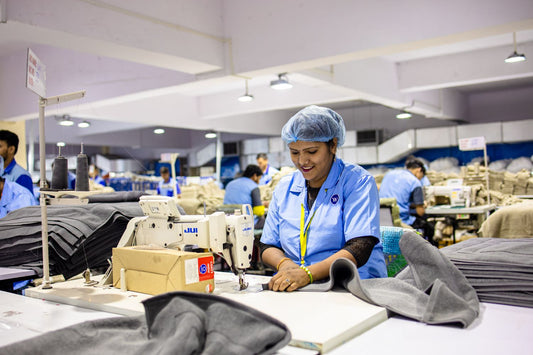
Changing one dimension on a shipped product line is not one change. It's new patterns for every affected panel, re-graded across sizes; new cutting dies; golden samples re-sewn and re-approved for each factory; and a production-batch boundary documented carefully so the warranty team knows which bags are which. Total engineering cost across the line: meaningful, but a rounding error next to a single season's return shipping bill. The factories' reaction was the tell — two of our pattern masters said some version of 'we always thought that sleeve was tight.' Knowledge like that lives on factory floors everywhere; it just rarely gets asked.
Three months of data
We changed nothing else that quarter on purpose — same fabrics, same marketing, same price points — so the returns data would be readable. Fit-related returns on the updated SKUs dropped 18% against the prior cohort. Overall return rate fell by a smaller but real margin, and the 'tight fit' phrase all but vanished from the comments field. The returns team, who had lobbied for the change, were still surprised by the size of the effect; they'd predicted single digits. Eighteen percent, from two millimeters.
What this changed about how we work
Three standing policies came out of this. Every internal dimension on a new pattern now carries explicit tolerance allowance — nominal spec must fit the stated device even at worst-case stack-up, not just at the drawing's happy center. Returns comments get read quarterly by product, not just by customer service; free-text complaints are the highest-resolution sensor we own, and they cost nothing. And every factory visit now includes one standing question for the sample room: 'What do you think is wrong with our bags?' The answers, so far, have been worth more than any consultant we've hired.
The lesson we keep retelling internally: customers rarely return products for the reasons on the dropdown menu. They return them for friction — accumulated, daily, two-millimeter friction. Find the friction, and the returns chart will tell you when you have.
There's a reason equipment designers treat body-measurement tolerance as its own discipline rather than an afterthought: ISO maintains a dedicated standard, ISO 7250-1, purely for defining how human body measurements should be taken and applied to technological design, with a companion statistical volume (ISO/TR 7250-2) summarizing population body-measurement data for exactly this kind of fit engineering. No standard sets a specific tolerance number for a laptop-sleeve compartment — that part is still Backper's own returns-data finding — but the underlying principle, that equipment dimensions need explicit allowance against real population variation rather than a single nominal spec, is a documented discipline, not something we invented on the fly.
The one outside reference in this piece: ISO 7250-1:2017 and ISO/TR 7250-2:2024 are the standards bodies use to define and apply human body-measurement data to equipment design — checked 17 Aug. 2026. They don't set a specific tolerance figure for this case; cited only as the discipline this kind of fit problem sits inside. The 2mm change, the tolerance stack-up reasoning, and the 18% returns drop are all Backper's own product and returns data, not a third-party citation.
Tags:
Previous
What gets measured: the audit framework we wrote for our factories.
Next
Northwind Outdoor: 14 stores, one private-label catalog.
Related articles


-
Jun 03 2026
Northwind Outdoor: 14 stores, one private-label catalog.


-
Jun 03 2026
The strange physics of webbing under shock load.

-
Jun 03 2026