Wholesale Custom Backpacks for Hotels and Resorts: The Volume, Margin and Regulation Numbers

Updated 7 August 2026 — this guide has been revised with sourced data, charts, and a note on what we could not verify.
For hotels, resorts, and hospitality brands, branded merchandise has evolved well beyond bathrobes and bottled water. Wholesale custom backpacks have become a high-impact category across multiple hospitality touchpoints — from in-room welcome gifts at luxury properties, to loyalty-program premium tier rewards, to in-house retail merchandise that guests actually buy, to staff programs that build property pride.
This guide walks through how hospitality brands use custom backpacks across the guest journey, with design considerations for different property types and program structures, and the operational details that make bulk procurement work in a hospitality context.
Why Backpacks Work So Well in Hospitality
Hospitality is in the experience business, and a thoughtfully designed backpack is itself an experience artifact. Guests carry the bag home, on subsequent trips, and into daily use — each touchpoint reinforces the property memory and brand association. Compared to other branded amenities, a backpack:
- Travels with the guest after departure, extending brand presence far beyond the stay.
- Generates word-of-mouth when guests are asked about the bag.
- Functions as a portable retail product when used in revenue programs.
- Signals a level of property investment that resonates with discerning travelers.
Before anything else: work out how many bags this actually is
The single most expensive mistake in a hospitality backpack programme is not the bag. It is the quantity, and it is almost always wrong in the same direction, because "an in-room welcome gift" sounds like a room-count decision and is in fact an arrivals decision. A property does not have 100 guests a year. It has 100 rooms, turning over all year.
| Keys | Occupied room-nights | 2-night stays | 3-night stays | 4-night stays |
|---|---|---|---|---|
| 40 | 9,096 | 4,548 | 3,032 | 2,274 |
| 100 | 22,740 | 11,370 | 7,580 | 5,685 |
| 200 | 45,479 | 22,740 | 15,160 | 11,370 |
| 400 | 90,958 | 45,479 | 30,319 | 22,740 |
Occupancy of 62.3% is CoStar/STR's US full-year 2025 figure, the first annual decline since 2020. Length of stay is our own scenario, not a published average: no industry body publishes US hotel length of stay, and we could not find one. Arrivals = keys × 365 × occupancy ÷ nights per stay.
Read the 40-key row. A small luxury property, one bag per arrival, needs about 3,000 bags a year. A 100-key property needs 7,600. Set that against the 250 to 500 units usually quoted for a luxury welcome amenity and the gap is between six and thirty times. The other guest-facing ranges on this page are larger and the gap narrows, but the shape of the error is the same.
This does not mean the quoted ranges are wrong. It means they describe a different programme. A 250 to 500 unit order is the right size for a selective amenity: top suites only, anniversary and milestone stays, recognised elite members, GM discretion. It is the wrong size for "every guest gets one", by an order of magnitude. Decide which you are buying before you ask for a price, because the two have completely different unit economics — and a supplier quoting you 300 units has assumed the first one.
| Programme | 100-key property | Annual units | What it costs at $65 a bag |
|---|---|---|---|
| Every arrival | All rooms | 7,580 | $492,700 |
| Suites only | 10 suites | 758 | $49,270 |
| Selective: suites, milestones, elites | A third to two thirds of suite arrivals | 250 to 500 | $16,250 to $32,500 |
Suite count assumed at 10% of keys, and the selective tier at a third to two thirds of suite arrivals — both our own planning assumptions, offered as a way to size the decision rather than as benchmarks. The $65 unit price is held flat across all three rows so the volumes are comparable; in practice a 7,580-unit order would price well below a 300-unit one, and discounts on the order of the volume breaks quoted later on this page would put it nearer $52 to $59.
And assume the guest takes it, because they will
There is a reason to be careful about the word "amenity". The only recurring primary survey on what leaves hotel rooms is run by the German review site Wellness Heaven, which asked 1,376 hoteliers — 740 from four-star and 636 from five-star properties — what guests take. Towels were reported by 79.2% of them. Cutlery by 27.5%. In-room tablets by 18.3%. Coffee makers by 11.4%. Mattresses, remarkably, by 6.6%.
The finding that matters for this decision is the split by class. Items are taken from five-star rooms at a far higher rate than four-star: in-room tablets 6.0 times more often, mattresses 5.4 times, televisions 4.9 times, artwork 4.3 times. The more expensive the room, the more the guest treats what is in it as included.
So a bag left in a luxury room is a gift, whatever your intention. If you were planning a loaner — a beach bag or a day pack that stays with the room — price it as a consumable with a replacement cycle, not as an asset. And if you are planning a gift, at least you are now planning the volume that a gift actually implies.
What this means for you. Do the arrivals arithmetic before the first supplier conversation. Take your key count, multiply by 365, multiply by your own occupancy, divide by your own average stay, and then decide what fraction of those arrivals the programme is really for. That number, not the room count, is what you should put in the RFQ.
Use Case 1: In-Room Welcome Gifts and Guest Amenities
For luxury and premium properties, an in-room branded backpack is increasingly a guest welcome amenity, particularly for suite-tier reservations, anniversary stays, and recognized loyalty members.
Design considerations
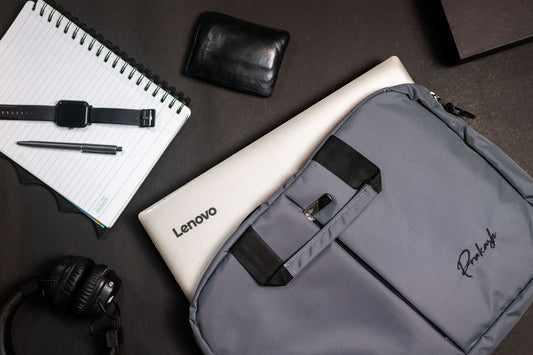
Lean toward sophisticated, neutral aesthetics that match the property's design language. A subtle tonal embroidered property logo on the front panel and a small leather patch with the property name near the handle reads as elevated rather than promotional. Avoid bright colors or large logos that would feel out of place in a premium room context.
Useful in-bag inserts
The bag works particularly well when paired with curated inserts: a property-branded notebook, a small leather luggage tag, a guidebook to the destination, and a personalized welcome card from the property's general manager.
Budget guidance
Most luxury hospitality welcome backpacks land at $45 to $95 per unit landed cost, with the broader welcome kit (bag plus inserts) coming in at $80 to $180 per delivered amenity.Use Case 2: Loyalty Program Tier Rewards
Loyalty programs use branded backpacks as premium tier rewards for elite-status members, milestone-stay achievements, or program redemption points. The bag becomes a tangible symbol of program status.
Design considerations
The bag should feel like a deliberate reward, distinct from a generic property amenity. Many programs design a unique annual edition for elite members, often with a year designation or limited-edition colorway that builds collectibility across program tenure.Distribution model
Loyalty backpacks typically ship to qualifying members rather than being distributed at the property. Plan for fulfillment logistics: a dedicated shipping carton, branded outer packaging, and tracking through a loyalty-program fulfillment partner.Co-branding with partner programs
Many hotel loyalty programs partner with airline, credit card, and lifestyle brands. Co-branded backpacks where both partner logos appear can be a tier reward for shared elite members.Use Case 3: In-House Retail Merchandise
For resorts, destination properties, and design-led urban hotels, custom backpacks have become a meaningful in-house retail revenue category. The guest experience generates the desire to take a piece of the property home, and a well-designed backpack converts that desire into revenue.
Design considerations
Property-branded backpacks sold at retail need to compete with what guests already own from premium consumer brands. That means premium materials (recycled rPET or canvas), refined hardware, subtle property branding (often a leather patch or woven label rather than bold embroidery), and a silhouette that the guest will actually use.Retail pricing economics
Most successful hotel retail backpack programs price in the $95 to $185 range, with landed wholesale cost of $35 to $75 per unit. The gross margin supports the merchandising overhead while staying accessible to guests.Inventory planning
Resort and destination properties see backpack retail demand spike around shoulder seasons and weather transitions. Plan inventory with seasonality in mind and use held-inventory programs to keep best-sellers in stock without overcommitting cash.Two numbers to check before you sign off the retail programme
The retail case above is the strongest commercial argument in this guide, and it is worth testing against what hotel retail actually earns rather than against what it feels like it should earn.
| Measure | Benchmark |
|---|---|
| Retail as a share of total hotel revenue | 0.9% |
| Retail department profit margin | 27.0% |
| Cost of goods sold, as a share of retail revenue | 50% |
| Labour, as a share of retail revenue | 17% |
| Retail revenue per occupied room, resorts | $6.01 |
| Retail revenue per occupied room, convention hotels | $3.17 |
| Retail revenue per occupied room, limited-service | $1.03 |
| Retail revenue per occupied room, extended-stay | $0.76 |
CBRE Hotels' Americas Research, Trends in the Hotel Industry, 467 US properties with self-operated retail, 2015 data — the most recent published openly. Leased retail is excluded. We could not find a more current openly published dataset; the figures are directionally useful rather than current, and margins in particular will have moved.
Two things follow, and they point in opposite directions.
The good news: the margin on this category is better than the benchmark
The retail figures in the section above imply a bag bought at $35 and sold at $95. That is a cost of goods of 37% of retail revenue, against a benchmark of 50%. Take off labour at the benchmark 17% and the margin on that item is around 46%. Compare like with like: run the benchmark through the same arithmetic — 100 less 50% cost of goods less 17% labour — and it comes out at 33%. So the advantage is about 13 points, not the 19 you get by comparing against CBRE's reported 27%, which is struck after all departmental expenses rather than labour alone.
| Landed cost | Retail | Cost of goods | Margin after labour | |
|---|---|---|---|---|
| Entry | $35 | $95 | 37% | 46% |
| Mid | $55 | $140 | 39% | 44% |
| Premium | $75 | $185 | 41% | 42% |
| Benchmark, all hotel retail, same arithmetic | — | — | 50% | 33% |
Our arithmetic, applying the benchmark's 17% labour ratio to the price points in the section above. The benchmark row is run through the same calculation for comparability; CBRE's own reported departmental profit margin is 27.0%, struck after all departmental expenses. Neither of our own figures includes markdowns, shrinkage, floor space or the working capital tied up in unsold stock. Those sit outside the departmental line anyway; the gap between our 33% and CBRE's reported 27% is other departmental expenses.
The reality check: the line you are adding to is small
Resort properties earned about $6.01 of retail revenue per occupied room — in 2015 dollars, which is about $8.40 in 2026 money, though nobody has published an updated figure. On a 200-key resort at 62.3% occupancy the 2015 number implies roughly $273,000 of retail revenue across the entire shop for a year, and the inflated one about $382,000 — every T-shirt, every sunscreen, every postcard. Put both in the same dollars and a $95 backpack is twelve occupied room-nights of total retail revenue. Retail overall is 0.9% of hotel revenue.
What this means for you. A branded backpack is a good retail product with an above-benchmark margin, and it is not going to move the property's P&L. Judge it as a brand asset that happens to pay for itself, and size the first order to sell through in a season rather than to hit a price break — unsold premium stock in a gift shop is the most expensive way to own a backpack.
Use Case 4: Staff Backpacks and Uniform Programs
Many hospitality properties issue branded backpacks to staff as part of uniform programs, particularly for guest-facing roles (concierge, valet, activity instructors, expedition guides at adventure properties). The bag functions as both a practical tool and a brand-presence asset.
Design considerations
Staff bags need to balance brand presentation with practical durability for daily use. Often spec'd in property-color polyester or rPET, with embroidered property logo and role designation (Concierge, Valet, etc.). Hard-use roles need reinforced construction.Bulk economics
Staff backpack programs typically run 100 to 500 units depending on property size, with per-unit cost of $22 to $48 for a mid-spec design.Property-Type-Specific Design Guidance
Luxury urban hotels
Sophisticated neutrals (charcoal, navy, deep olive, oat). Premium materials (waxed canvas, leather trims, ballistic polyester). Subtle branding (tonal embroidery, leather patches). Silhouettes that work for business travel and urban commuting (commuter daypacks, slim laptop backpacks).Resort and beach properties
Brighter, vacation-aligned colors that work in resort contexts. Often spec'd in lighter-weight materials with quick-dry linings. Beach-friendly features (sand-resistant zippers, ventilated compartments). Often co-marketed with the resort's broader retail program.Adventure and outdoor properties
Technical materials and features (Cordura or rPET ripstop, hydration compatibility, internal frame for load carrying). Property branding subdued to match outdoor aesthetic. Often designed in collaboration with adventure activity programming (guided hikes, expedition trips).Heritage and boutique properties
Heritage-aesthetic materials (waxed canvas, leather, brass hardware). Bespoke design that ties to property architecture or local craft tradition. Lower-volume runs that emphasize collectibility.Wellness and spa properties
Natural materials and calm color palettes. Soft-line silhouettes (roll-tops, drawstring-adjacent backpacks). Often paired with co-branded spa accessories (toiletry pouches, yoga mat straps).Operational Considerations for Hospitality Programs
Multi-property consistency for brand groups
For hotel groups with multiple properties or sub-brands, deciding whether to design a unified group-level backpack or allow property-level variation is a key operational decision. Group-level designs simplify procurement; property-level designs strengthen individual property identity.Year-round vs seasonal inventory
Programs split between core year-round designs (the property's permanent retail SKU) and limited-edition seasonal releases (winter colorway, anniversary edition). The mix improves repeat-guest engagement.Coordination with broader merchandise programs
Backpacks work best when they coordinate with the property's broader merchandise lineup — sharing a color story, branding language, and material approach with other items in the gift shop or retail program.Procurement timing
For seasonal programs (summer resort opening, holiday gift inventory, new-property launch), plan production 4 to 6 months in advance. For year-round restocking, work with suppliers who hold core inventory to enable 4 to 6 week reorder cycles.MOQs and Pricing for Hospitality Programs
Typical hospitality backpack program ranges:
- Luxury welcome amenity program, 250 to 500 units: $48 to $95 per unit.
- Loyalty tier reward program, 500 to 2,000 units: $42 to $85 per unit.
- Retail merchandise program, 300 to 1,000 units: $35 to $75 per unit landed (selling at $95 to $185 retail).
- Staff uniform program, 100 to 500 units: $22 to $48 per unit.
- Multi-property group programs, 5,000+ total units: 10 to 20 percent volume discount versus single-property pricing.
The regulation everyone is getting wrong
If you buy amenities for a European property you have probably been told the EU bans miniature hotel toiletries from August 2026. It does not, and the error is worth correcting because it is driving procurement decisions on the wrong timetable.
The relevant instrument is the Packaging and Packaging Waste Regulation, Regulation (EU) 2025/40, adopted 19 December 2024, published in the Official Journal on 22 January 2025 and in force from 11 February 2025. It applies generally from 12 August 2026 — which is the date being misquoted. The restriction that actually concerns hotels sits in Article 25 and Annex V, point 5, and covers "single use packaging for cosmetics, hygiene and toiletry products for the use in the accommodation sector" that is "intended for an individual booking only and intended to be discarded before the next guest arrives" — the illustrative examples given are shampoo bottles, hand and body lotion bottles, and sachets around bar soap. It applies from 1 January 2030. Read that scope test carefully: it is what puts wall-mounted bulk dispensers and refillable formats outside the restriction.
One detail that is easy to miss, and cuts the other way. Unlike the neighbouring restrictions on condiment sachets, which read "single use plastic packaging", Annex V point 5 reads "single use packaging" and does not name a material. It is not a plastics ban. A single-use paper or card format can fall within it just as a plastic one does. If your response to this rule is to switch miniatures from plastic to paperboard, check the wording before you commit — and note that the earlier Single-Use Plastics Directive, Directive (EU) 2019/904, never covered hotel toiletries at all. That gap is exactly what point 5 closes.
For the UK the position is simpler: there is no equivalent restriction on hotel toiletries in force or in draft as at August 2026. England has banned plastic straws, stirrers and cotton buds since October 2020, and single-use plastic plates, trays, bowls, cutlery and polystyrene containers since October 2023, but nothing touching amenities.
What this means for you. You have until 2030 in the EU and no deadline at all in the UK, which is enough time to make this a design decision rather than a compliance scramble. The durable-bag argument is a good one on its own merits — it just is not urgent, and any supplier telling you it becomes mandatory next month is quoting the wrong date.
What we could not verify
- Length of stay is our scenario, not data. We could not find a published US or European average length of stay for hotels from any primary body — STR does not publish it openly and the AHLA report does not contain it. The nearest verified figure is the European Commission's EU Tourism Dashboard, which gives 3.0 days average duration at EU tourist accommodation in 2022, but that covers all accommodation types and is four years old. The arrivals arithmetic above is only as good as the number you put in for your own property.
- Luxury-segment occupancy is not published openly. CoStar's free releases carry national aggregates only, so the 62.3% we use is all US classes. Luxury occupancy usually runs above it — CBRE put the luxury premium at about 750 basis points over the long run to 2018 — which would make the volumes above understated for a luxury property, not overstated. For a labelled proxy, Host Hotels & Resorts reported 70.0% occupancy and a $327.54 ADR across its predominantly US luxury and upper-upscale portfolio for 2025.
- The retail benchmarks are 2015 data. That is the most recent CBRE published openly. Margins, cost of goods and the retail revenue per occupied room will all have moved in a decade, and we could not find a current replacement. Treat the shape of the finding as sound and the precise figures as dated.
- Hotel amenity spend per occupied room is collected but not published. Both the HOST Almanac and CBRE's Trends gather it; neither releases it free. The nearest public figure is CBRE's 2015 cost of complimentary services within the rooms department: $2.70 per occupied room at resorts, $1.68 at full-service hotels — and that explicitly excludes guest supplies.
- There is no published merchandise attachment rate for hotel retail. No association or benchmarking body publishes one. Any percentage you are shown for "share of guests who buy something in the gift shop" is a vendor assertion.
- The guest-theft survey is one source, and it is European. Wellness Heaven's 2023 edition is the only recurring hotelier-side survey we found with a published methodology; its respondents are predominantly European and its percentages are the share of hoteliers reporting an item taken, not the share of guests taking it. A 2026 survey attributed to a short-term-rental operator circulated widely this year with higher numbers, but we could not locate its primary publication or methodology and have not used it.
Sources
Occupancy and revenue. CoStar/STR, US hotel performance, full-year 2025, released 20 January 2026. AHLA 2026 State of the Industry Report, 27 January 2026. Host Hotels & Resorts FY2025 results, 18 February 2026. CBRE Hotels' Americas Research on the luxury occupancy premium, an average of roughly 750 basis points over 1989 to 2018.
Retail and amenities. CBRE Hotels' Americas Research, Trends in the Hotel Industry, 467 US properties with self-operated retail, published 15 December 2016 on 2015 data; and CBRE on the cost of complimentary services per occupied room, 2015 data.
Regulation. Regulation (EU) 2025/40 on packaging and packaging waste, Article 25 and Annex V point 5. Directive (EU) 2019/904 on single-use plastics, Article 5 and Part B of the Annex. The Environmental Protection (Plastic Straws, Cotton Buds and Stirrers) (England) Regulations 2020, and the October 2023 England extension.
Guest behaviour. Wellness Heaven, Study: Theft in Hotels, fieldwork September to October 2023, published 15 January 2024, 1,376 hoteliers.
Written 7 August 2026. Occupancy moves every month and the regulation dates will not, but check both before you quote either.
Marriott added almost as many loyalty members in 2025 as Hyatt has ever signed up
The "Loyalty Program Tier Rewards" use case above treats a branded backpack as a status symbol for elite members. What it does not size is how fast the eligible population moves. The four US-listed hotel groups all report loyalty membership in their own quarterly and annual results, and on the most recent numbers the growth rate is the story, not just the base.
| Programme | Total members | As of | Recent growth | Source |
|---|---|---|---|---|
| Marriott Bonvoy | Nearly 271 million | 31 Dec 2025 | +43 million added in 2025 | Marriott Q4/FY2025 results, 10 Feb 2026 |
| Hilton Honors | More than 260 million | 11 Feb 2026 | Not disclosed in this release | Hilton Q4/FY2025 results, 11 Feb 2026 |
| IHG One Rewards | Over 160 million | 17 Feb 2026 | Not disclosed in this release | IHG FY2025 results, 17 Feb 2026 |
| World of Hyatt | More than 60 million | 5 Nov 2025 | ~30% a year since 2017 | Hyatt newsroom release, 5 Nov 2025 |
Figures as disclosed by each company in its own investor or newsroom release; none of the four breaks membership out by elite tier, so the totals include every enrolment level, not just the guests who would qualify for a tier-reward backpack. Membership is not deduplicated across programmes, so the four totals cannot be summed into a single addressable audience.
Marriott's single year of net adds in 2025 — 43 million — is worth close to three-quarters of the entire membership Hyatt has built since its loyalty programme existed. All four programmes are still growing at a pace that outruns most annual procurement cycles: Hyatt alone has compounded at roughly 30% a year since 2017. None of the four companies discloses what share of members hold elite status, so there is no public figure for exactly how many guests would qualify for a tier-reward bag — but the base those elite tiers are drawn from is large and growing every quarter, not fixed.
What this means for you: Size a loyalty-tier backpack order to this year's elite-member count and it will already be short by the time the bags ship, for the same reason the welcome-amenity volume earlier on this page is usually undercounted — the eligible population is a rate, not a snapshot. Ask your supplier for a held-inventory or short-cycle reorder arrangement for tier rewards rather than a single fixed-quantity purchase order, and confirm your own loyalty team's current elite-member count directly rather than estimating it from total membership.
Source Your Hospitality Backpack Program With Backper
Backper produces wholesale custom backpacks for luxury hotels, resort groups, design-led boutique properties, and global hospitality brands. We work to property-design aesthetics, support multi-property consistency programs, and handle retail-grade packaging for in-house merchandise programs.
Browse our Custom & branded collection for premium silhouettes, the Travel collection for travel-focused designs, or the Hiking & outdoor collection for adventure-property programs. View Bulk deals for current pricing, or contact our hospitality team for a tailored quote. We respond within one business day.
Tags:
Previous
Branded Backpacks vs Tote Bags vs Drawstring Bags: What the Impressions and Duty Numbers Actually Show
Next
Custom Backpacks for Healthcare: Nursing, Medical, and Pharma Programs