


Rewritten 9 August 2026 — this guide has been rebuilt with sourced references, a safety correction to its clinical features section, and a note on what we could not verify.
Safety correction, and it is the reason this page was rewritten. The previous version of this guide listed a "sharps-safe pocket: a puncture-resistant pocket for transporting used supplies (where local policy permits)" as a clinical feature to specify. The parenthetical does not save it — no local policy can permit what the federal standard forbids. That advice was wrong and following it would put a clinician at risk. Under the OSHA Bloodborne Pathogens Standard, a container for contaminated sharps must be closable, puncture-resistant, leakproof on the sides and bottom, and labelled or colour-coded as a biohazard; it must also be kept upright in use and closed before it is moved. A fabric pocket can meet at most one of those six, and only with the right laminate. The feature has been removed, the correct alternative is set out below, and we have said so here rather than deleting the sentence quietly.
A note on who wrote this. Backper sells wholesale custom backpacks, so a guide to specifying them is written by an interested party. We have rebuilt this page to name a source for every number, to remove the ones we could not support — which was most of them — and to say plainly where a requirement lands on us rather than on you.
Healthcare buyers are asked to specify a bag against three things at once: what a clinician actually carries, what the facility's infection-control and privacy policies permit, and what a compliance team will sign off. The previous version of this guide got the first wrong in one place that mattered more than everything else on the page, guessed at the second, and got the third wrong in three places.
What follows keeps the same structure and replaces the substance. Where we have no source, we say so instead of inventing a range.
Healthcare Backpack Use Cases
The category covers programmes with very little in common beyond the word "backpack", and the differences matter more than the similarities.
Nurses, home health and EMS
Hospital nurses, home health and community clinicians, and pre-hospital providers. The organisation requirements differ by setting more than by role: a hospital nurse's bag mostly commutes, a home health bag is opened on a stranger's floor several times a day, and an EMS pack is kit rather than luggage. That last distinction is the one buyers most often collapse.
Nursing student onboarding kits

Issued by nursing schools and university health programmes to incoming cohorts, usually alongside scrubs and a clinical supply kit. The bag is expected to survive several years of rotations, which makes it a durability specification rather than a giveaway.
Pharma and medical device sales programmes
Reps carry a laptop, detailing materials on a tablet, and samples between accounts. These are employee equipment programmes, and that is not a stylistic distinction — it is the only structure that is compliant. A branded bag given to a healthcare professional is a different transaction with a different legal answer, set out under regulatory considerations below.
Hospital system onboarding
Branded bags issued to new clinicians, residents and fellows as part of an onboarding programme. Subdued institutional branding, laptop protection, and a specification that will still be available in three years so cohorts match.
Conference, CME and patient resource programmes
Attendee and sponsor bags at medical meetings, and resource bags issued to patients in chronic-condition, post-discharge or oncology programmes. Patient bags are usually the largest volumes and the tightest budgets, and are often funded from institutional or grant money with its own procurement rules.
We have dropped the claim that "most of those requirements never appear in a general-purpose wholesale catalog". It is an assertion about other suppliers' catalogues that we did not check and could not check at any useful scale, and it exists to make our own catalogue sound necessary. What is defensible is narrower: the features below are specified less often, so they are more likely to need a sample round rather than a stock pick.
Clinical Organization Features That Matter
The interior specification is where a clinical bag differs from a commuter bag. These are worth asking for by name. If the factory has not built one before, ask what it intends to substitute rather than assuming the words mean the same thing to both of you:
- Stethoscope compartment — a padded channel that holds a stethoscope coiled rather than crushed against a laptop.
- Pen and penlight loops — elastic loops sized for clinical pens and a penlight.
- Supplies organiser — mesh pockets and loops for wipes, gauze, gloves and small instruments, ideally visible at a glance rather than dug for.
- Hand sanitiser attachment — an external clip or loop, reachable without opening the bag.
- Badge attachment — an external loop for a lanyard or retractable holder.
- Padded laptop and tablet sleeves — separate, because clinicians and reps carry both.
- Wet and dry separation — a lined compartment for damp clothing or a change of scrubs. It is not a container for used PPE: contaminated PPE has to go into a designated, closable, labelled container under 29 CFR 1910.1030(d)(3)(viii) and (d)(4)(iii)(B), for the same reason the sharps pocket was removed.
- Smooth, non-absorbent interior linings — easy to wipe and slow to absorb fluids. Avoid felt or brushed linings, which trap organic material. This was in the previous version and is restored here.
- Tight-weave, low-porosity fabrics — a fabric that does not soak up a spill is easier to decontaminate than one that does. Also restored.
- Insulated compartment — specialty use only, and worth asking what temperature range is actually claimed and over what period, because an insulated pocket is not a validated cold chain.
The sharps question, answered properly
This is the feature that was wrong on the previous version, so it gets the space rather than a footnote.
| Requirement | Source | Can a bag pocket meet it? |
|---|---|---|
| Closable | 29 CFR 1910.1030(d)(4)(iii)(A)(1) | No — a zip does not prevent protrusion of contents |
| Puncture resistant | Same | Possibly, with the right laminate. This is the one criterion a fabric can plausibly meet, and it is the one the old feature name borrowed |
| Leakproof on sides and bottom | Same | No |
| Labelled or colour-coded as a biohazard | 29 CFR 1910.1030(g)(1)(i) | Not without making the whole bag a biohazard container |
| Maintained upright throughout use | 29 CFR 1910.1030(d)(4)(iii)(A)(2)(ii) | No |
| Closed before removal, to prevent spillage in transport | 29 CFR 1910.1030(d)(4)(iii)(A)(3)(i) | No |
The criteria are cumulative, not alternatives — four describe the container and two describe how it must be handled. A seventh requirement, that containers are replaced routinely and never allowed to overfill, sits at (d)(4)(iii)(A)(2)(iii) and is a procedure rather than a specification. In California the point does not even arise: Health & Safety Code § 117750 defines a sharps container as a rigid, puncture-resistant container used in patient care or research activities that meets the standards of, and receives approval from, the FDA as a medical device — so a textile pocket is excluded by definition.
What to specify instead. The bag should carry a rigid, FDA-approved sharps container. It cannot replace one. NIOSH tells home healthcare workers to bring their own labelled, leakproof, puncture-resistant container to the home rather than assume one is there, and to secure it during transport.
The bag-technique guidance is specific about where it rides: an in-use container, no more than two thirds full, may be hand-carried or stored in an exterior compartment of the bag — never inside it, so a contaminated container never shares a compartment with clean supplies. It must be closed before the bag is moved, and placed in a secondary container where external contamination is possible. So the design question is where a rigid container rides and whether it is retained upright, not how tough the lining is.
Moving sharps between sites is a compliance decision, not a specification decision. It engages the transport rules for regulated medical waste and whatever your state or country adds on top. That belongs with your compliance function. No bag feature settles it, and a supplier who tells you otherwise — as this page previously did — is answering a question they are not qualified to answer.
Infection Control and Hygiene Considerations
There is real evidence here, and it points somewhere other than where bag marketing points.

| What was cultured | Positive for any human pathogen | Positive for a multidrug-resistant organism |
|---|---|---|
| Bag exterior | 84% | 15.9% |
| Bag interior | 48.4% | 6.3% |
| Patient-care equipment carried inside | 43.7% | 5.6% |
Bakunas-Kenneley and Madigan, American Journal of Infection Control 2009;37(8):687–688, as reported in McGoldrick, Home Healthcare Nurse 2014;32(1):39–45. The study describes the nursing bag as a ubiquitous fomite. It did not test antimicrobial fabric, and no source we found shows that treated fabric changes these numbers.
The finding that matters is where the contamination is. The outside of the bag is the dirtiest part of it, by a wide margin, and the outside is the part no fabric treatment or lining specification is aimed at. What reduces the risk is handling procedure — the practice known as bag technique: the bag goes down on a clean barrier rather than the floor, hand hygiene happens before reaching back into it, nothing contaminated goes back in, and the bag itself is cleaned on a schedule. A bag can support that or obstruct it, which is a real design brief: a wipeable exterior, a flat stable base, and compartments that let a clinician reach one item without touching the rest.
Verify the specification against the facility's own policy before you commit to a volume. Hospital systems set their own rules on what may travel between patient areas, what materials are acceptable and what cleaning protocol applies, and those rules beat anything a supplier tells you. We could not establish how common a restriction on personal bags is — we found trust policies excluding them from theatres and other policies silent on the question — which is exactly why the answer has to come from the facility rather than from this page.
Antimicrobial treatments, and what may legally be claimed
The previous version said antimicrobial efficacy testing "varies" and to treat it as a marketing claim. That was too gentle, and it understated a legal restriction. In the United States a treated article is exempt from pesticide registration only where the treatment protects the article itself. Claims that a treated fabric is antibacterial, kills germs, or protects a person are public-health claims that the exemption does not cover, and the EPA says so in terms. The permitted claims are about the fabric: resists odour, resists mildew, resists deterioration. If a supplier offers you an "antimicrobial" bag for a clinical setting, the claim itself is the problem.
On whether it works at all, the position of the infection-control guidance is not neutral. The CDC's environmental infection control guideline advises caution about using antimicrobial textiles as replacements for standard fabric items, noting expressly that the EPA has not approved public-health claims for treated articles. We found no CDC recommendation for antimicrobial-treated textiles as an infection-prevention measure, and no WHO one either — see the note below on what that search did and did not establish. Do not buy the treatment expecting an infection outcome, and do not let it appear in a document a compliance officer will read.
Wipe-clean surfaces, and a category error worth avoiding
A staff member's personal bag is not a patient-care item, and Spaulding — the classification that sorts devices and surfaces by the risk of the contact they make — was not written with a staff member's personal bag in mind. There is no regulatory standard for disinfecting a personal bag, and a supplier who implies otherwise is borrowing authority that does not exist. What does exist is practice guidance: the bag-technique literature asks for cleaning when visibly soiled and on a regular schedule — weekly at best practice, monthly at the outside — with a moist low-level disinfectant wipe left in contact for the time the label states.
Two practical consequences. First, most EPA-registered disinfectants are registered for hard, non-porous surfaces; a soft-surface textile claim is an added use-site claim requiring a demonstrated log reduction on specified textile substrates, under EPA test methods finalised in August 2023. A wipe that is cleared for a bedrail says nothing about your fabric. Second, "hospital-grade disinfectant" is not a defined regulatory term — the EPA term is "hospital disinfectant", an efficacy tier describing activity against a defined set of test organisms, and it says nothing about material compatibility. Ask your supplier which specific disinfectant the coating has been tested against and for how many cycles. If they cannot name both, the coating is untested against that product — and we should say plainly that we cannot answer it for our own coatings either.
On materials: home care practice guidance recommends a non-porous exterior — vinyl, coated fabric or leather — precisely because a woven textile cannot be wiped clean. A TPU-coated polyester is consistent with that. We previously listed "certain treated rPET fabrics" alongside it, which was wrong: a treated recycled woven is still a porous textile, and treatment does not make it wipeable.
Regulatory and Compliance Considerations
Three of the compliance statements on the previous version of this page were inaccurate. All three are corrected below with the instrument named, because a procurement team will be asked to justify them.
Patient information and HIPAA
| Question | The answer | Instrument |
|---|---|---|
| Does HIPAA require a lockable bag compartment? | No. No rule names a lock, a compartment or a bag | 45 CFR 164.306(b), flexibility of approach |
| What applies to paper records in a bag? | The Privacy Rule duty to have appropriate safeguards and to reasonably safeguard protected health information against unintentional disclosure | 45 CFR 164.530(c)(1) and (c)(2)(i) |
| What applies to a laptop or drive in a bag? | The Security Rule, which covers electronic protected health information only. Device and media controls require policies on removal and receipt; the named safeguard for data at rest is encryption, which is addressable rather than required — a rulemaking proposed in January 2025 would change that, and had not been finalised when this was written | 45 CFR 164.310(d)(1); 164.312(a)(2)(iv) |
| So where does a lockable compartment sit? | As a reasonable physical safeguard a covered entity may choose as an output of its own risk analysis. Useful, defensible, not mandated | 45 CFR 164.308(a)(1)(ii)(A) |
The practical consequence: if a programme's security case rests on a bag, it is resting on the wrong thing. Encryption on the device is the control that matters, and it is not something a bag supplier can sell you.
Promotional items and healthcare professionals
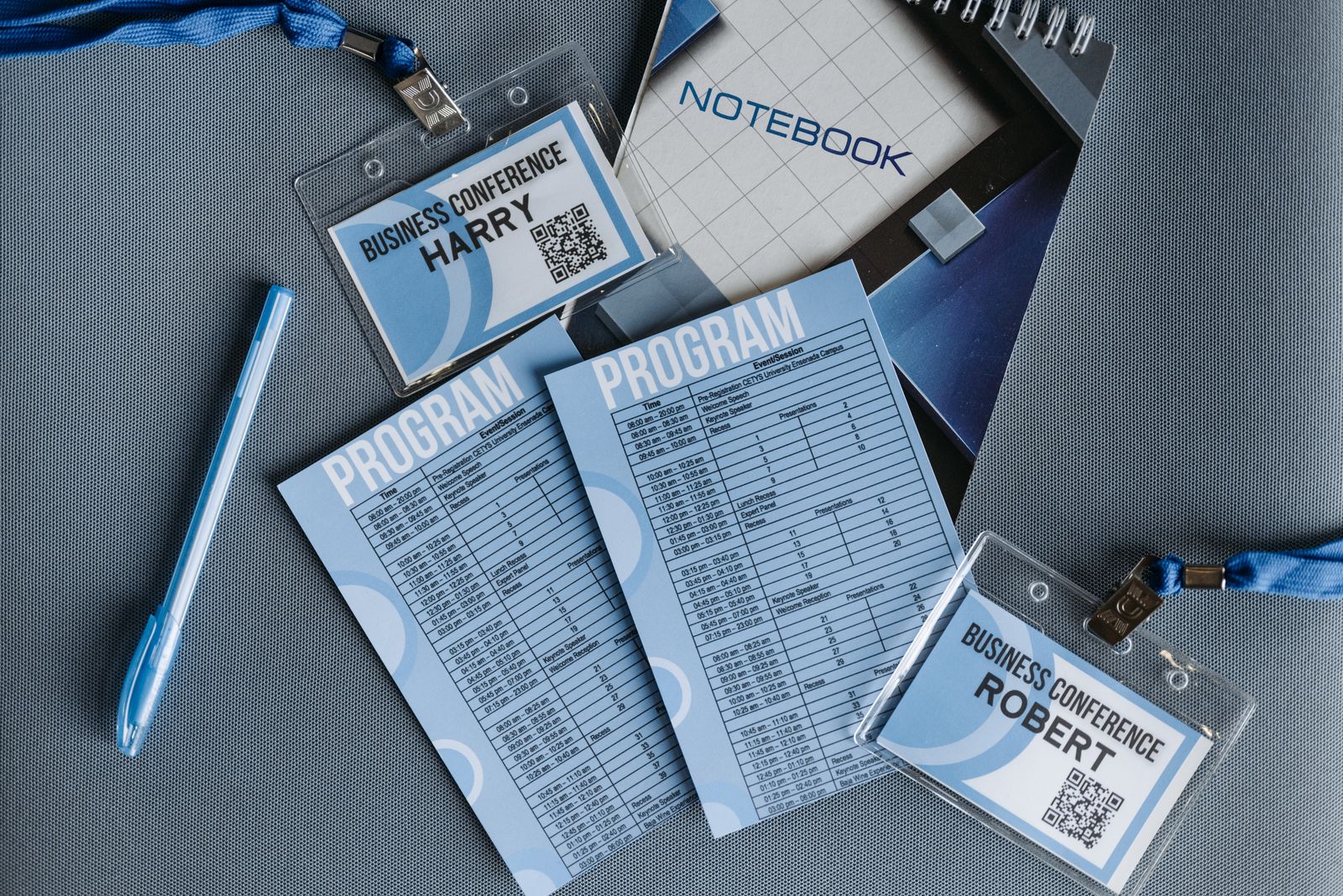
We previously described "restrictions on what they can provide to healthcare providers as gifts". That understates it to the point of being misleading. Branded, non-educational promotional items to healthcare professionals are prohibited by the industry codes, with no minimal-value exception — in mandatory terms by AdvaMed, and in the language of a voluntary commitment by PhRMA. These are self-regulatory codes rather than statutes: they bind adherent companies, and counterparties and the OIG treat them as the standard of conduct. The PhRMA Code says items that do not advance disease or treatment education should not be offered, even where they are practice-related items of minimal value such as pens, notepads and mugs. The AdvaMed Code says a company may not provide branded, non-educational promotional items to healthcare professionals even if the item is of minimal value. In Europe, the EFPIA and IFPMA codes prohibit gifts for personal benefit and prohibit promotional aids in relation to prescription-only medicines. A backpack is not a borderline case under any of them.
Underneath the codes sits the federal Anti-Kickback Statute, which reaches remuneration in kind offered to induce referrals or purchasing of federally reimbursable items. The OIG's compliance guidance for pharmaceutical manufacturers treats gifts and business courtesies as a risk area and notes that following the PhRMA Code reduces risk without providing legal protection.
There is also a reporting dimension that catches people out. Under Open Payments, a transfer of value to a covered recipient is reportable above a small-value threshold that is indexed annually; for programme year 2026 the thresholds are $13.82 per payment and $138.13 in annual aggregate. A backpack at any realistic unit cost sits above the per-payment figure. But a bona fide employee of the manufacturer is excluded from the definition of a covered recipient — which is the actual reason an internal sales-rep equipment programme works and a gift to a physician does not. If your programme is the first kind, say so in the documentation.
Compliance documentation, and what a certificate can be
We previously listed "BSCI, SA8000" together as social compliance certifications. amfori BSCI is not a certification — amfori states this plainly. It is a membership-based due-diligence programme, and an audit produces a rated report rather than a certificate. SA8000 is a certification, issued to a facility by an accredited certification body, never to a brand.
The same trap applies to the material schemes. OEKO-TEX STANDARD 100 may be referenced only for the exact certified product, and its labelling guide expressly forbids ingredient-style claims that reference certified components when the whole product is not certified. The Global Recycled Standard is a chain-of-custody scheme: sites hold scope certificates, shipments carry transaction certificates, and a consumer-facing claim requires the product to reach the scheme's recycled-content threshold within a certified chain. In both cases a mill's certificate does not entitle a brand to mark a finished bag. SA8000 is a different animal again: it certifies a production site's labour practices and never becomes a product claim at all. Ask for the certificate in the holder's name with number, scope and expiry, and check the scope covers the article you are buying.
Design Considerations by Healthcare Role
This section used to give a capacity in litres for each clinical role — 20 to 25 litres for hospital nurses and again for pharma reps, 25 to 30 for home health, 25 to 28 for nursing students. Those numbers are gone. No nursing body, occupational health authority, ergonomics standard or peer-reviewed source publishes capacity guidance by clinical role; every figure we could trace led back to a bag retailer's blog. The apparent precision of a 25-to-28 band was the giveaway: it is a distinction no evidence could support.
The more useful variable is what the bag will weigh when it is full, and there the literature is real. A narrative review of backpack biomechanics places the upper bound for adults carrying loads at around 40% of body mass, beyond which the physiological cost climbs steeply, and finds that load placement matters as much as load size: high and tight against the back, with shoulder straps short enough to keep it there, and a hip belt where the load justifies one. Read that figure carefully. It is an exhaustion ceiling drawn from military and hiking load-carriage research, not a daily occupational limit and not specific to clinicians — 40% of body mass is 28 kg for a 70 kg nurse, which no one should be carrying on a ward. Treat it as the point at which the literature stops arguing, not as a target. The military load-carriage literature documents what happens past that point, including the compression injury known as rucksack palsy.
Volume is the wrong metric because it does not tell you the load. A 25-litre bag holding textbooks, a laptop and a water bottle will outweigh a 30-litre bag holding soft goods. Specify what the bag must carry, then check the loaded weight against the wearer rather than against a litre figure.
What does differ by role, and is worth writing into a brief:
- Hospital-based clinicians — the bag mostly commutes and is stored during the shift. Laptop protection and a shape that fits a locker matter more than clinical organisation.
- Home health and community — the bag is opened repeatedly outside a controlled environment. A wipeable exterior, a stable flat base that keeps it off the floor, an exterior position for a rigid sharps container, and separation between clean supplies and anything used.
- EMS and pre-hospital — this is kit, not a backpack programme. Modular attachment, reinforced construction, and visibility. If your brief mentions MOLLE, you are buying a different product from the rest of this page.
- Students — multi-year durability, laptop and tablet protection, and a price point a student cohort can be issued at scale. Warranty and repeat availability matter more than features.
- Sales and field teams — a professional silhouette, laptop and tablet protection, and organisation for samples. Compliance structure as set out above.
Branding for Healthcare Programs
Restrained branding is the convention in this sector: a tonal or low-contrast embroidered institutional logo, a department or role designation on a side panel or strap, optional name embroidery on premium programmes, and a partner logo placed discreetly on co-branded work. We are not able to point you at a study showing that restrained branding performs better with clinical audiences — it is a convention we observe rather than a measured effect, and we would rather say that than dress it up.
Two branding decisions do have consequences beyond taste. Placing a sponsor's logo on a bag distributed to healthcare professionals runs into the prohibition set out above, whatever the design looks like. And a heavily personalised bag — name embroidery, role, department — is a bag that cannot be reissued or replaced from stock, which is a programme cost rather than a design one.
MOQs and Pricing for Healthcare Programs
The previous version of this page carried five per-unit price bands and five programme volume ranges, from $14 to $28 per unit for patient resource bags up to $48 to $95 for pharma programmes. Every one of those figures has been removed. We went looking for a source. There is no published dataset, procurement benchmark, industry survey or trade-association figure that measures custom backpack pricing or healthcare merchandise programme volumes — not from the promotional products associations, not from the group purchasing organisations, whose price files are contractual and unpublished. Those numbers were our own impressions written in the register of market data, which is the specific thing this rewrite exists to stop.
What we can show you is one of our vendors' published catalogue price breaks — the Mark Ryden 2025 catalogue — which is narrow and clearly labelled rather than broad and invented.
| Bag type | Models with all three tiers | Discount at 50 units | Discount at 500 units |
|---|---|---|---|
| Backpack | 79 | 4.3% | 8.2% |
| Sling bag | 42 | 7.1% | 14.4% |
| Laptop bag | 15 | 5.3% | 10.5% |
| Chest pack | 12 | 6.7% | 12.1% |
| Handbag | 7 | 4.5% | 9.1% |
| Storage bag | 7 | 8.3% | 16.7% |
| All 180 models | 180 | 5.4% | 10.6% |
Backper analysis of the Mark Ryden 2025 catalogue price breaks, covering the 180 models that publish all three tiers. This is a single supplier's list price structure, not an industry benchmark, and it is EXW — before branding, freight, duty and margin. Categories with fewer than seven models are omitted from the table and included in the total.
What this means for a healthcare programme. Multiplying your order by ten does not halve your unit cost, and a proposal built on the assumption that it will is a proposal that breaks at the second cohort. In this data the step from 50 units to 500 is worth about five percentage points on top of the first break. The variables that move a healthcare unit price more than volume does are the specification itself — a coated wipeable shell, a genuine stethoscope channel, separate laptop and tablet sleeves — and the decoration method, where a multi-colour embroidery on a four-colour institutional crest costs more than the fabric upgrade underneath it.
Our own numbers, since we are showing you someone else's. Our minimum is 100 units per style branded, 50 for catalogue stock. Some of our other guides still quote a 300 to 500 range in body text; the lower figures are the commitment and the rest of the site is being corrected.
And our own discounts are much steeper than the chart above, which you should know before you use that chart against us. Our site FAQ publishes automatic discounts running from 15% at 50 units to 29% at 1,000 or more — roughly three times the median break in that vendor catalogue. That gap is not a claim about our efficiency. A discount that large at those volumes is coming out of a margin rather than out of a factory price list, which is worth understanding on both sides of a negotiation. Our surcharge schedule is not published; ask for it in writing.
Production Considerations for Healthcare Programs
Put the sample in front of a clinician from the target group, not a procurement committee. Organisation that reads sensibly on a specification sheet fails in use for reasons nobody predicts from a drawing: a stethoscope channel positioned where a shoulder strap crosses it, a sanitiser loop that swings into a doorframe, a supplies pocket that has to be fully unpacked to reach the item at the bottom. This is one of the few pieces of advice on this page that costs us something, because it produces a revision round.
Plan multi-year, because these programmes are multi-year. Onboarding cohorts arrive annually or twice a year. Ask what happens to your pattern and tooling between orders, whether any custom fabric or hardware is held and who carries the cost of holding it, and what the reorder minimum is against the first-order minimum. A programme that is easy to start and hard to repeat becomes visible at the second cohort, when the fabric has been discontinued and the replacement does not match the first year's bags.
Decide the replacement policy before launch, not after the first breakage. Student and clinician programmes generate individual replacement requests from day one. Ask the supplier to hold replacement stock and to quote what holding it costs. The previous version of this page told you to require it, and softening that into a menu of options the buyer pays for either way was not an accuracy correction, so it is back as an instruction.
Source Your Healthcare Backpack Program With Backper
Applying this page's own tests to ourselves:
| Requirement | Where we stand |
|---|---|
| Healthcare programme track record | Not evidenced here. We have not published named healthcare programmes or referenceable clients in this sector. If clinical experience is a selection criterion for you, ask us for specifics before you shortlist us |
| Minimum order quantity and volume breaks | 100 units per style branded, 50 for catalogue stock. Our site FAQ publishes automatic discounts running from 15% at 50 units to 29% at 1,000 or more. Our surcharge schedule is not published — ask for it in writing |
| Tooling, pattern retention and reorder minimum | Not published. We hold patterns, but with no published retention period, no published position on who carries custom fabric or hardware between orders, and no published reorder minimum against the first-order minimum. Ask, and get the answer on the proforma invoice |
| Certificates in our own name | None. No OEKO-TEX STANDARD 100 certificate for a finished bag and no GRS scope certificate. By the rule set out above, that means we cannot put those marks on a bag we sell you. We pass mill certificates through with number, scope and expiry, and tell you what they do not cover |
| Social compliance documentation | Ask before you rely on it. Where an audit report exists it belongs to a production site, not to us, and an amfori BSCI report is not a certificate whatever a procurement form calls it |
| Wipeable and coated shells | Available. We have not tested any coating against a named disinfectant for a stated number of cycles, and we will not claim we have |
| Antimicrobial treatment | We do not recommend specifying it, for the legal and evidential reasons above. If your procurement form requires it, we would rather have that conversation than quietly quote it |
| Paid pre-production sample | Yes, on every project. What the fee covers, whether it is credited and how many revisions it includes are not published — ask |
Seven of these eight rows record something we cannot evidence, do not publish, or do not hold. The eighth is a recommendation against something a buyer may be about to ask us for. A page in which its author passes every one of its own tests is a sales page with headings.
If a healthcare programme is what you are scoping, send the brief with the clinical setting, the loaded weight the bag has to carry, the decoration method and the cohort schedule. You can see current silhouettes in our custom and branded collection and stock-priced items in bulk deals, and you can ask for a quote here.
Related reading. For how to interrogate any supplier including this one, see the supplier selection checklist. For what the compliance requirements look like when the wearer is a child rather than a clinician, that guide's compliance section covers the children's product rules.
What we could not verify
- There is no market data for this category, and that is the finding. Nobody publishes per-unit pricing, programme volumes, or capacity norms for healthcare backpack programmes. The promotional products associations publish industry sales estimates, not product-level benchmarks; group purchasing organisation price files are contractual and cover clinical supply rather than merchandise. Every number removed from this page was removed because we went looking for its source and there was not one.
- Our price-break analysis is one vendor's catalogue. It is real published data and we have shown our working, but 180 models from a single supplier is not the market. Treat the 10.6% median as an illustration of shape, not a number to negotiate against.
- The contamination study is from home care, in 2009. It is the best evidence we found on bags specifically, and we did not find an equivalent study of hospital-based staff bags or a more recent replication. Do not read the percentages as current or as applying to a hospital setting.
- We could not confirm how common hospital restrictions on personal bags are. We found published trust policies excluding personal bags from specific clinical areas such as theatres, and we found other policies silent on the question. "Verify against the facility's policy" is the honest instruction; "hospitals restrict personal bags" would have been an overstatement.
- The regulatory statements are a map, not advice. Whether your specific programme triggers a reporting obligation, and what your compliance function requires, are questions for that function. Thresholds and code editions change — the Open Payments figures are indexed annually and the industry codes are revised. Nothing here is legal advice.
- We have not read every scheme document end to end. The OEKO-TEX labelling rule, the GRS chain-of-custody requirement and amfori's own statement that BSCI is not a certification are taken from the schemes' published materials. Check the current version before writing one into a contract.
- The load guidance is from general and military biomechanics, not from clinical practice. We found no study of what clinicians carry or what they should. The percentage-of-body-mass framing is better than the litre figures it replaces, which is not the same as being specific to nursing.
- Two negatives are the absence of a finding, not a finding. We searched for a CDC or WHO recommendation supporting antimicrobial-treated textiles and did not find one; not finding a recommendation is weaker evidence than finding one against, although the CDC guidance we do cite advises caution. Separately, ISO 11228-1 is the international standard governing manual handling and carrying, and it is paywalled — we have not read its limit tables and have therefore quoted no figure from it.
- Our own status is self-reported. The table above is what we know about ourselves today, and every line of it can be evidenced on request. Ask.
Sources
Sharps and occupational safety. OSHA Bloodborne Pathogens Standard, 29 CFR 1910.1030, in particular (d)(4)(iii)(A) on containers for contaminated sharps and (g)(1)(i) on biohazard labelling; California Health & Safety Code § 117750; FDA consumer information on sharps disposal containers in health care facilities; NIOSH, Fast Facts: Home Healthcare Workers — How to Prevent Needlestick and Sharps Injuries, DHHS (NIOSH) 2012-123; NIOSH, Selecting, Evaluating, and Using Sharps Disposal Containers, DHHS (NIOSH) 97-111; 49 CFR 173.6(a)(4) materials of trade and 173.134 on regulated medical waste.
Infection control. Bakunas-Kenneley I, Madigan EA, American Journal of Infection Control 2009;37(8):687–688; McGoldrick M, "Bag Technique: Preventing and Controlling Infections in Home Care and Hospice", Home Healthcare Nurse 2014;32(1):39–45; CDC/HICPAC Guidelines for Environmental Infection Control in Health-Care Facilities (2003), recommendation on antimicrobial textiles; CDC Guideline for Disinfection and Sterilization in Healthcare Facilities (2008) on the Spaulding classification and non-critical items; EPA PR Notice 2000-1 on the applicability of the treated articles exemption to antimicrobial pesticides, and 40 CFR 152.25(a); EPA guidance and test methods for disinfectant efficacy claims on soft surface textiles in non-residential settings, final version 29 August 2023, superseding the December 2022 interim guidance.
Privacy and promotional compliance. HIPAA Privacy Rule 45 CFR 164.530(c); Security Rule 45 CFR 164.306(b), 164.308(a)(1)(ii)(A), 164.310(d)(1) and 164.312(a)(2)(iv); Anti-Kickback Statute 42 U.S.C. 1320a-7b(b); OIG Compliance Program Guidance for Pharmaceutical Manufacturers, 68 Fed. Reg. 23731 (5 May 2003); PhRMA Code on Interactions with Health Care Professionals, section on non-educational items; AdvaMed Code of Ethics on Interactions with U.S. Health Care Professionals (effective 1 June 2023); EFPIA Code of Practice articles 11.01 and 11.02; IFPMA Code of Practice 2019; Physician Payments Sunshine Act 42 U.S.C. 1320a-7h and 42 CFR 403.902 and 403.904(h)(2), with the programme year 2026 thresholds published by CMS.
Load carriage and schemes. Genitrini M, Dotti F, Bianca E, Ferri A, "Impact of Backpacks on Ergonomics", International Journal of Environmental Research and Public Health 2022;19(11):6737; Knapik JJ, Reynolds KL, Harman E, "Soldier Load Carriage", Military Medicine 2004;169(1):45–56; ISO 11228-1:2021 on manual handling; OEKO-TEX labelling guide; Textile Exchange Global Recycled Standard; Social Accountability International on SA8000; amfori's own description of amfori BSCI.
Our own position. Minimum order quantity, sample policy, certificate status and the price-break analysis are ours and self-reported. The price-break figures are computed from the Mark Ryden 2025 catalogue, covering the 180 models with all three published tiers; the working is available on request.
Rewritten 9 August 2026. This page previously recommended a bag feature that would have breached an occupational safety standard, and carried ten pricing and volume figures with no source behind them. Those are the two most serious of the eight corrections marked in the text above, all of which are shown rather than quietly deleted. Regulations, code editions and reporting thresholds change — re-check anything here before it goes into a specification or a compliance file.
Tags:
Previous
Wholesale Custom Backpacks for Hotels and Resorts: The Volume, Margin and Regulation Numbers
Next
Shipping, Freight and Customs for Wholesale Backpack Orders: The 2026 Numbers
Related articles


-
Jul 16 2026