
Wholesale Custom Sports Backpacks for Teams: When the Roster Actually Exists, and What You May Claim

Rewritten 10 August 2026 — this guide has been rebuilt on governing-body statistics, state association calendars, the tariff schedule and federal regulation, with corrections to its timing, pricing and compliance sections and a note on what we could not verify.
A note on who wrote this. Backper sells custom team bags. The previous version of this page published four price bands, a roster-timing rule, a replacement-stock percentage and a set of capacity figures. Not one of them had a source. One of them — the roster timing — is not merely unsourced but contradicted by the published calendars of the state associations that govern the seasons it describes.
The numbers are gone. What replaces them is narrower, and in two places it makes us look worse: our cheapest published price tier starts above the size of a typical team, and the single most useful thing on this page is a legal obligation that falls on the school buying the bags rather than on the supplier selling them.
Everyone selling team bags writes the same page. Sport-by-sport capacity in litres, a list of compartments, four price tiers and a paragraph about ordering early. We wrote that page too. Going back through it with sources in hand, the sport-by-sport section turned out to be the least important thing on it, and three things that were not on it at all turned out to decide whether a team programme works.
Those three are: when the roster actually exists, which is far later than anyone writes; what you are allowed to say about an anti-odour cleat compartment, which is a federal question with enforcement behind it; and who is allowed to pay, which is where school programmes get into trouble. The structure of this page is unchanged. Most of the numbers are.
The roster does not exist when you need it to
The old version said player names and numbers "usually finalize 4 to 8 weeks before season start", and told you to build the production calendar around that. It is a comfortable claim and it is wrong, in a way that is checkable in about four minutes against any state association's published calendar.
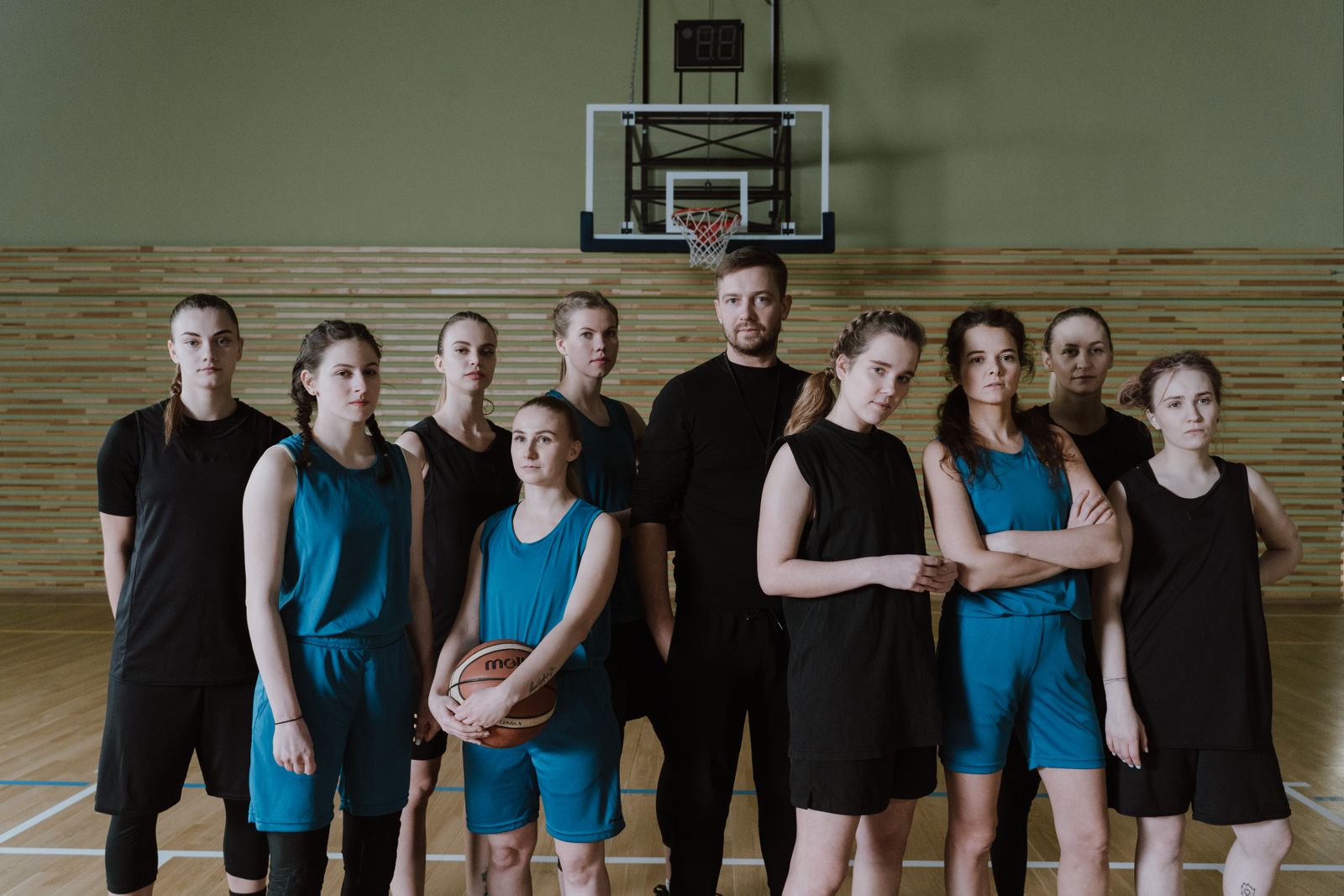
Squads assemble at first permitted practice. Tryouts and cuts happen at or after it. A roster is therefore not knowable before first practice — and first practice is not months before the season, it is a few weeks before the first game.
| Sport | First practice | First contest | Days |
|---|---|---|---|
| Football, 2A-3A and 8-man | Mon 27 July 2026 | Wed 19 August 2026 | 23 |
| Football, 4A-6A | Mon 3 August 2026 | Wed 26 August 2026 | 23 |
| Boys soccer, fall | Mon 27 July 2026 | Mon 17 August 2026 | 21 |
| Girls volleyball | Mon 10 August 2026 | Wed 26 August 2026 | 16 |
| Basketball, all divisions | Mon 2 November 2026 | Wed 18 November 2026 | 16 |
| Baseball, softball, tennis | Mon 8 February 2027 | Wed 24 February 2027 | 16 |
| Track and field, golf | Mon 8 February 2027 | Mon 22 February 2027 | 14 |
Arizona Interscholastic Association, Timeline by Sport, 2026-27. Arizona is used because its calendar is published as a single clean table; the three-season structure and the size of the gap are common across state associations, and Mississippi's 2026-27 calendar shows the same shape on different dates. Check your own state's.
Twenty-three days. That is the entire window between a football roster becoming knowable and the first game, and it is the largest number in the table. For most sports it is sixteen.
Nothing that is manufactured in Asia and personalised with individual names fits inside sixteen days. Not production, not decoration, not ocean transit, not customs. So a personalised team bag ordered when the roster is genuinely final cannot arrive before the season starts. That is not a supplier failing to try hard enough. It is arithmetic, and every page that tells you to "order early" while also telling you to wait for the roster is asking for two incompatible things.
What actually works, given the squeeze. There are only three honest options and every team programme is one of them:
- Split the decoration. Order blanks with the team logo on a projected headcount, ship them, and apply individual names domestically after tryouts. The logo is the long-lead item; the name is not. This is the option most programmes end up at, and it is worth designing for deliberately rather than discovering in August.
- Order a season ahead. Place the order for next year's squad during this year's season, and accept that you are buying against a projected roster with returning-player names known and new names not.
- Accept mid-season delivery and tell the athletes that. A bag that lands in week four of the season is fine if nobody was promised it in week one.
What does not work is the plan the old version of this page implied, which was to wait for a final roster and still open the season with bags in hand.
The corollary is that the cutoff date matters more than the lead time. Ask a supplier for their artwork-and-manifest cutoff, in writing, expressed as a date rather than a duration, and ask what happens to a name submitted the day after it.
How big a team order actually is
The old version published price tiers starting at 50 units. It never checked that against the size of a team. The governing bodies publish enough to check it.
| Sport | Schools | Participants | Per school |
|---|---|---|---|
| Football, 11-player, boys | 14,269 | 1,029,588 | 72.2 |
| Soccer, boys | 12,969 | 484,908 | 37.4 |
| Track and field outdoor, boys | 17,390 | 644,235 | 37.0 |
| Soccer, girls | 12,516 | 393,048 | 31.4 |
| Baseball | 16,110 | 472,598 | 29.3 |
| Basketball, boys | 18,690 | 540,704 | 28.9 |
| Volleyball, girls | 17,027 | 492,799 | 28.9 |
| Softball, fast pitch | 15,726 | 338,315 | 21.5 |
| Basketball, girls | 18,208 | 356,240 | 19.6 |
| Cross country, girls | 15,836 | 191,733 | 12.1 |
NFHS High School Athletics Participation Survey, 2024-25 (cover-numbered 52; NFHS has used that number on more than one edition, so cite the school year rather than the number): 8,266,244 participants across boys' and girls' programmes. Per-school figures are our own division of the survey's two published columns. Read them as programme totals, not squad sizes — a school's 72 football participants are a varsity, a JV and a freshman squad, so any single squad is materially smaller. At college level the NCAA reports 554,298 student-athletes across 19,928 teams, an average squad of 27.8.
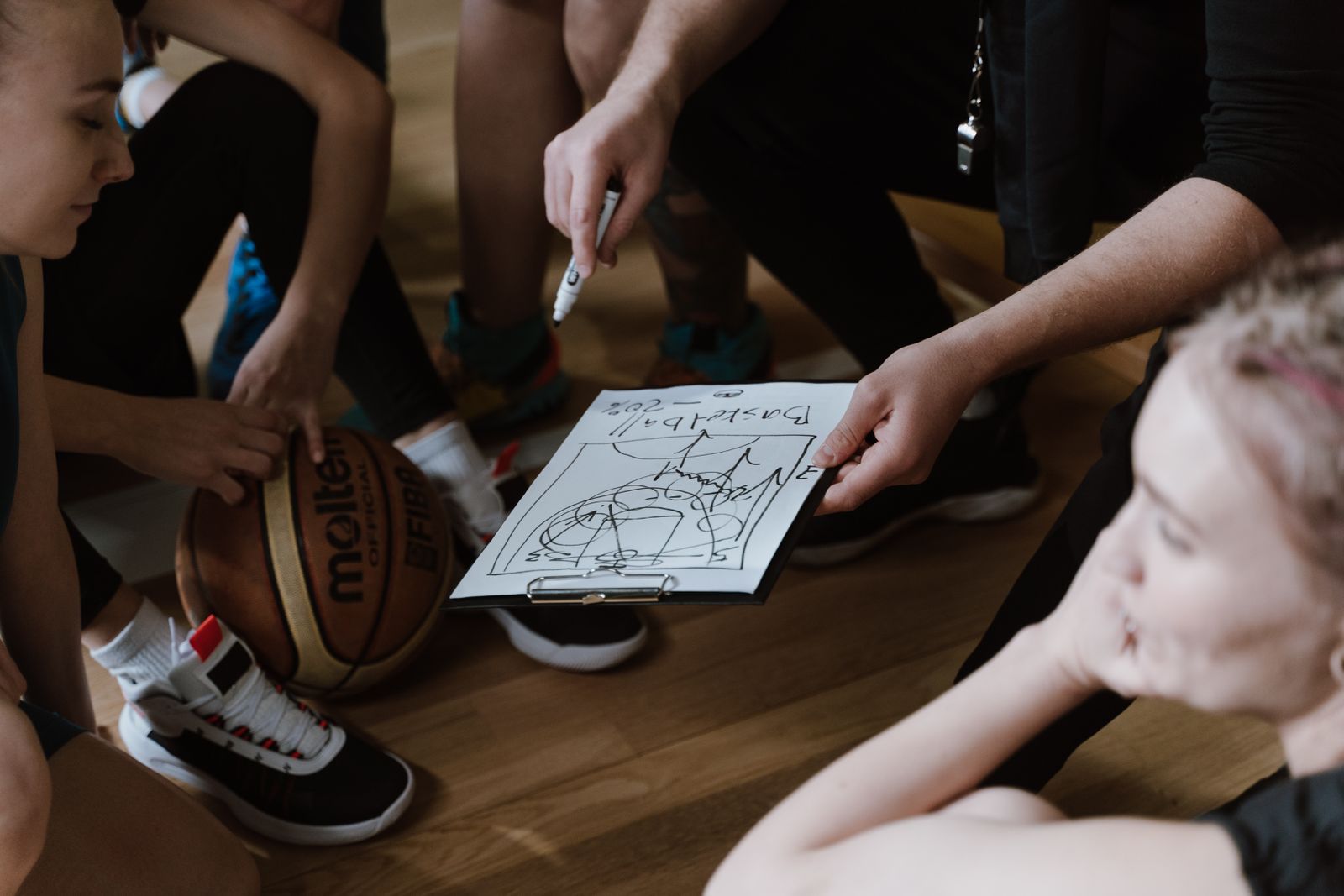
The correction runs against us. A single high-school or college squad is typically twenty to thirty-five athletes. Our lowest published price tier started at 50 units — above the size of most of the teams this page is written for. Either the tier was aspirational or the page was not really addressed to single teams. Both are worth knowing before you use anyone's tier table, ours included, to budget.
The practical consequence is that most genuine team orders are multi-squad orders — varsity plus JV, or several sports at once, or a whole league — assembled specifically to clear a minimum. That is a legitimate way to buy, and it is a different conversation from "what does a team bag cost".
The prices we published, and why no independent benchmark exists
We previously quoted $22 to $42 a unit at 50 to 100 pieces, $26 to $52 at 200 to 500, $24 to $48 for league programmes above 1,000, and $3 to $8 for name and number personalisation. We went looking for something to check those against. Note in passing that those bands rise from the 50-100 tier to the 200-500 tier before falling again, which is not how volume pricing works and is the first sign that nobody had checked them.
There is no published benchmark for decorated team backpacks, and there is a structural reason why. Public school and university purchasing generates exactly the kind of primary data that would settle this — bid tabulations and cooperative contracts, published as PDFs, with awarded unit prices. Those documents exist and they do list bags. Awarded line items we found include a 24x36 mesh laundry bag at $2.35, a mesh ball bag at $2.35, a mesh duffle at $2.52 and a wheeled goalkeeper bag at $80.15 (Pennsylvania district, 2021), and a speed ball bag at $17.88 and a double ball bag at $22.96 (New York district, 2024-25).
None of them is a decorated team backpack — and the cooperative contracts explain why not. The BSN Sports cooperative agreement led by Region 4 ESC in Texas prices by percentage off catalogue list, and its schedule expressly carves out the category: in-stock athletic equipment at 18% off, branded apparel at 8 to 35% off, and custom uniforms and decoration excluded from the contract altogether.
So public procurement buys undecorated commodity gear competitively, on published terms, and buys decorated team gear off-contract, on quoted terms that never become public. The absence of a benchmark is not an accident of our searching. It is built into how the category is sold — and it applies to every price range you will read on this subject, including the ones we deleted.
Personalisation: half right, and missing the charge that actually bites
The $3 to $8 personalisation figure survives contact with published contract-decorator rate cards, for one method only.
| Method | Published rate | Against our $3-$8 |
|---|---|---|
| Embroidered personalisation, one line | $5.00; two lines $7.00. Base embroidery falls from $5.20 at 6-11 pieces to $3.20 at 200+ | Consistent. A one-line embroidered name at team quantities lands inside the band |
| Tackle twill name, one colour | $15.00 | Three to five times our figure |
| Tackle twill number, 6-10 inch, one colour | $10.00 | A name plus a number is $25, not $8 |
| Small twill number, 2-4 inch | $5.00 per colour | Scales with colours, which our band did not mention |
| Minimum run charge | $31.20 embroidery, $27.00 appliqué | Omitted entirely from the old version |
Published rate cards of two US contract decorators, Rebyl Sports and Threadin' It Up, read August 2026. These are commercial price lists, not a neutral benchmark — they are evidence that a rate exists at a published number, not evidence of a market average. Rates are for garment-trade decoration; applying twill or embroidery to a made-up bag panel is a different operation and may not price the same.
Two things follow. First, state the method, not just "personalisation" — a quote is meaningless without it, and the gap between embroidered and twill is larger than the gap between most bags. Second, the run minimum is the number that decides your replacement policy, which brings us to the other figure we deleted.
The 5 to 10 percent replacement stock rule
The old version told you to order 5 to 10 percent spare bags. We could find no published basis for it. The Athletic Equipment Managers Association — the professional body whose members do this job — publishes no replacement-percentage standard. District and university equipment policies that address the question address uniform replacement cycles measured in years, which is a different concept. Every source pairing a percentage buffer with team ordering is supplier or decorator marketing.
There is, however, a real and sourced reason to over-order slightly, and it is better than the folklore it replaces: a mid-season reorder of two or three bags carries a decorator run minimum of roughly $27 to $31 before any per-unit charge, on top of a fresh production and shipping cycle. That is the argument for spares. It gives you a way to size them — against the minimum charge, not against a percentage somebody made up.
The capacity figures, and why they are not comparable between suppliers
The sport-by-sport litre ranges in this guide are our own production convention. They are reasonable and we have left them, but two caveats belong next to them.
They are not a standard. ASTM F2153 is the published test method for measuring backpack capacity, and unless a supplier states that their litre figure was measured to it, you do not know what the number means. Capacity can be quoted as CAD volume, as the volume of packing beads the bag will hold, or as a marketing round-up, and the same bag can carry three different litre figures honestly. Two suppliers' "32 litres" are not necessarily the same bag.
The second caveat is that the sport-specific compartment list is the part of a spec that costs money and changes nothing about your duty, your compliance or your lead time — as the rest of this page sets out. Spec it because athletes want it, which is a good reason. Do not spec it believing it is the consequential decision.
What you are allowed to claim about an anti-odour compartment
This is the section the old version did not have, and it is the one with penalties attached.
Vented cleat compartments and wet-gear pockets are routinely sold as "antimicrobial" or "antibacterial". In the United States, a treated article is exempt from pesticide registration under 40 CFR 152.25(a) only where the treatment protects the article itself, and only "if the pesticide is registered for such use". EPA's guidance on that exemption, PRN 2000-1, sets out which claims stay inside it and which do not — and the list is more restrictive than almost anyone selling bags realises.
| Inside the exemption | Outside it — this is an unregistered pesticide |
|---|---|
| "Contains an antimicrobial agent to control odors" "Resists odors — treated to resist bacterial odors" "Odor-resistant" "Treated with a fungistatic agent to protect the product from fungal growth" "Treated to resist deterioration from mildew" |
A claim of "antibacterial", "bactericidal" or "germicidal" activity, or any reference to activity against germs Control of organisms infectious or pathogenic to man Any sterilant, disinfectant, virucide or sanitizer claim Controlling the spread of allergens by inhibiting mould or mildew An unqualified claim of "antimicrobial" activity |
EPA Pesticide Registration Notice 2000-1, Applicability of the Treated Articles Exemption to Antimicrobial Pesticides, 6 March 2000; notice of availability at 65 FR 7007, 11 February 2000. PRN 2000-10 later deferred the date EPA would begin relying on it to 30 April 2001. The final line is the one that catches people: a bare "antimicrobial" hangtag, with nothing qualifying it to protection of the bag itself, is outside the exemption on EPA's own reading.
This is enforced. In September 2009 EPA filed a FIFRA complaint against VF Outdoor over silver-treated footbeds in dozens of footwear styles, on claims that the treatment "inhibits the growth of disease-causing bacteria"; EPA's announcement put the penalties sought at close to a million dollars. The instructive part for a bag buyer is the defence: the biocide was EPA-registered. That did not save the product, because the problem was the sentence on the packaging, not the chemistry. Since then EPA has settled at $6,991,400 with Electrolux over nanosilver filters marketed as helping "eliminate bacteria in the air", and at $1.5m with Tzumi Electronics and Enchante Accessories — the latter a consumer accessories importer, which is the same posture as a team-bag buyer.
The condition most people miss. The exemption requires that the biocide be registered for that article, not merely registered. "It's an EPA-registered antimicrobial" is not the answer to the question. Ask for the EPA registration number and confirm the registered label covers the substrate class you are putting it on.
And in Europe the failure mode inverts. Under Article 58 of the Biocidal Products Regulation (EU) 528/2012, making a biocidal claim about a treated article does not destroy an exemption — it triggers a positive labelling duty: state that the article incorporates biocidal products, name every active substance, disclose any nanomaterials with "(nano)", and give the relevant instructions. Article 58(2) separately requires that every active substance be approved for the relevant product type before the article may be placed on the market at all. And Article 58(5) imposes a standing duty to tell any consumer who asks, within 45 days and free of charge, about the biocidal treatment — whether or not you have made any claim. Two markets, two opposite traps, one hangtag.
The ventilated compartment claim has no test behind it
Separately from what you may say, there is the question of whether the thing is measurable at all. We looked for a published standard that measures what a vented cleat compartment is sold as doing. There is not one.
| Standard | What it actually measures |
|---|---|
| AATCC TM100 | Quantitative antibacterial activity of a fabric swatch: inoculate, incubate, count bacteria recovered at 0 and 24 hours |
| AATCC TM147 | Qualitative — a zone of inhibition on agar. Gives "a rough estimate of activity" on a swatch |
| ISO 20743 | Antibacterial activity of textile products, by absorption, transfer or printing inoculation. Still a specimen, still static |
| ISO 22196 | Plastics and non-porous surfaces. Explicitly excludes antibacterial textiles |
| AATCC TM199 / TM201, ISO 17617 | Drying rate of a flat fabric on a heated plate or moisture analyser |
| ISO 811, AATCC TM127 | Hydrostatic head: the water pressure at which a flat, clamped, undamaged fabric specimen lets water through |
| ASTM F2153 | Backpack capacity. Volume, and nothing else |
Every antibacterial method above is a static laboratory inoculation on a flat coupon at controlled temperature and humidity. None involves airflow, an assembled bag, a wet cleat, or a use cycle. We identified no published standard measuring ventilation performance, in-use drying of gear inside a compartment, or microbial growth inside a finished bag.
So a supplier offering you an AATCC 100 or ISO 20743 report has demonstrated that a piece of lining fabric reduced bacteria in a petri-dish condition. That is a real test and it is not evidence for the compartment claim.
The same gap runs through wet/dry separation. ISO 811 and AATCC TM127 measure a flat clamped specimen under rising static pressure. They do not test seams, stitch-hole leakage, the zip, or the compartment interface — which is precisely where a wet/dry divider fails. If wet/dry matters to your programme, specify a hydrostatic head figure in millimetres on the liner as supplied, ask for the same test re-run after a stated wash and flex conditioning, and specify the seam and closure treatment separately. There is no published standard for whole-compartment holdout; that has to be a bespoke fill-and-invert protocol agreed with the supplier.
The obligation that falls on the buyer, not the supplier
If the bags are for a school or college athletic programme, Title IX reaches them, and no supplier page we have seen mentions it.
34 CFR 106.41(c) lists the factors used to assess whether a recipient provides equal athletic opportunity. The second enumerated factor is "the provision of equipment and supplies". The 1979 Policy Interpretation defines that category as including "uniforms, other apparel, sport-specific equipment and supplies, general equipment and supplies", and states that compliance is assessed by examining the equivalence for men and women of the quality, the amount, the suitability, the maintenance and replacement, and the availability of that equipment.
Buying team backpacks for the boys' programme and not the girls' is, on the face of the regulation, an equipment-and-supplies disparity in amount and availability. That is not an exotic reading. It is the ordinary one.
Stated honestly, because we are inferring. We could find no OCR guidance document or resolution agreement in which team bags are the named basis of a finding. The closest we found is a 2021 North Carolina resolution over baseball-versus-softball equipment, where carrying bags appear only incidentally in an inventory. So: the obligation is a sound inference from the regulation and the Policy Interpretation's own definition, and it is not a decided case about bags. If anyone tells you OCR has ruled on team bags specifically, ask them for the citation.
The practical version for an athletic director: scope the order across the programme, not across one team, and if budget forces a phased rollout, phase it in a way you would be comfortable explaining. This is also, incidentally, the reason a lot of team orders reach a supplier's minimum — the equitable order is the bigger one.
Two rules everyone quotes at team bags that do not apply to them
Buyers routinely arrive believing their team bag logo has to fit inside a governing-body size limit. It does not.
The NCAA rule does not reach bags. The commercial-logo provision — now Bylaw 22.4, "Use of Commercial Trademarks or Logos on Equipment, Uniforms and Apparel", having moved from the 12.5.4 numbering most content still cites — has long limited a manufacturer's mark on the uniform "and all other items of apparel" to 2¼ square inches. The predecessor provision, 12.5.4, enumerated the apparel it meant — socks, head bands, T-shirts, wrist bands, visors or hats, swim caps and towels — and the word "bag" appeared nowhere in it, nor in the NCAA championship uniform FAQs built on it. We are reading the predecessor, for the reason given in the caveats below. Nor does the rule reach anything outside "athletics competition and pre- and postgame activities". Note also that this area moved on 1 August 2026: Division I Proposal 2025-35, adopted 23 January 2026, permits additional commercial or nonprofit logos of up to four square inches each.
The NFHS rules do not reach bags either, and they are not one rule. The 2¼-square-inch manufacturer's-logo limit is replicated separately in each sport's rules book under different rule numbers — volleyball 4-2-1(f), track and field 4-3-1, and so on — and every one of them governs worn uniform items. Several sports carried a 2½-square-inch limit as recently as the mid-2010s, so a figure quoted from an old compilation may be wrong in both directions.
The practical point: size your team bag logo for legibility from the sideline, not to a rule that does not cover it. If a bag is going to be worn in NCAA competition, check the sport's playing rules for placement, because Proposal 2025-35 leaves placement to them — but the 2¼-inch number is not your constraint on a backpack.
Who is allowed to pay for the bags
A large share of team gear is funded by booster clubs, and there is a well-settled rule about how they may do it that catches programmes every year.
A tax-exempt booster club may buy bags for the whole team out of general funds. It may not credit an individual family's fundraising work against that family's own gear cost. In Capital Gymnastics Booster Club v. Commissioner, T.C. Memo. 2013-193, the Tax Court sustained revocation of exemption where roughly 93% of fundraising profits were allocated only to the members who did the fundraising, cutting their individual assessments by 50 to 70%. The court's reasoning turned on the mechanism: the club's "points" were "as good as dollars", and the benefit was a private one. The doctrine behind it is older — Rev. Rul. 69-175 holds that "when a group of individuals associate to provide a cooperative service for themselves, they are serving a private interest" — and the IRS set out the athletic-booster fact pattern in its own exempt-organisations training text.
What this means for the order. If a supplier offers to invoice families individually against a booster club's fundraising credits, that is a structure the club's accountant should see before you accept it. It is not the supplier's exposure. It is the club's exemption.
What actually moves the landed cost
The sport-specific features that dominate the top of this guide are, at the border, close to irrelevant. What moves the rate is the fabric.
| Outer surface | HTS | MFN rate |
|---|---|---|
| Other vegetable fibres | 4202.92.20.00 | 5.7% |
| Cotton | 4202.92.15.00 | 6.3% |
| Insulated food or beverage bag, textile outer | 4202.92.04 / .08 | 7% |
| Insulated food or beverage bag, plastic sheeting outer | 4202.92.10 | 3.4% |
| Man-made fibres — the normal case | 4202.92.31 (.3120 backpacks, .3131 other) | 17.6% |
| Sheeting of plastics | 4202.92.45.00 | 20% |
USITC Harmonized Tariff Schedule, current release August 2026. The insulated lines classify the whole article as an insulated bag; they are not reached by putting an insulated compartment in a backpack. Chinese origin adds 25% under Section 301 List 3 at HTS 9903.88.03 on every one of these lines, taking the man-made-fibre case to 42.6% before the July 2026 forced-labour action below. Duty is charged on transaction value, so it scales with your FOB price.
Four findings from the ruling record are worth having before you sign a spec.
Sport-specific features are classification-neutral. A bat compartment, a ball pocket, a racket sleeve and wheels do not move a carrying bag out of 4202.92.31. CBP has classified a wheeled polyester bag with a telescopic handle at 4202.92.3131, and a child's backpack with moulded wheels and a telescoping handle at the backpack line, reasoning that the wheeled handle "is affixed to the backpack" and imported as part of it. Backpacks and other sports bags of man-made fibres carry different statistical suffixes and the same 17.6% duty.
A mixed shell can cost you 2.4 points. In a 2024 ruling on five backpacks, one at 50% plastic sheeting and 50% polyester fell to the 20% line under GRI 3(c), because neither material imparted the essential character. A trim change that takes a bag to half plastic sheeting is a duty decision.
An insulated compartment can cut the rate to 7%. CBP classified the larger Camelbak hydration systems as backpacks but the smaller ones as insulated food or beverage bags at 7%. Whether a hydration or cool-pocket bag reaches that line is fact-specific and worth a ruling request if the volume justifies it.
Some things you think are bags are not in Chapter 42 at all. Larger knotted-net ball carriers have been classified as netting under 5608 — and in the same ruling a single-ball carrier went to 9506.99, out of textiles altogether. A fitted racket cover imported with the racket goes to 9506.51 under GRI 5, but the same cover imported separately, or any multi-racket cover, returns to Chapter 42. And unfinished golf bag bodies classify at 6307.90 rather than 4202 — relevant if any part of your programme imports components.
On top of the MFN rate, and moving. Section 301 List 3 adds 25% to Chinese-origin goods on all of these lines, taking a man-made-fibre sports bag to 42.6%. A further Section 301 action on failure to enforce forced-labour import prohibitions was published at 91 FR 47318 on 28 July 2026, effective for entries from 24 July 2026, covering around sixty economies — 12.5% for China and Vietnam, 10% for a tier including India, Bangladesh, Cambodia and the United Kingdom, under new Chapter 99 headings in the 9903.05 series. Its exemption annexes cover civil aircraft, pharmaceutical use, a short list of enumerated articles, Section 232 goods, USMCA and CAFTA-DR originating goods, humanitarian donations and informational materials. Chapter 42 bags fall into none of those, so the working figure for a Chinese-origin man-made-fibre sports backpack entered on or after 24 July 2026 is about 55.1%. We have read the exemption categories rather than every line of the annexes, so have your broker confirm it against your entry. Note also that switching origin helps less than it used to: Vietnam is covered at the same 12.5%. Separately, the IEEPA-based tariffs were held unauthorised by the Supreme Court in Learning Resources, Inc. v. Trump on 20 February 2026 and are no longer collectible; CBP is processing refunds through its CAPE programme. Section 301 duties are not IEEPA duties and survive that decision intact. Get your broker to confirm the stack against your specific entry.
The other reason to order early, which is not the one usually given
Pages like this one say "order early" and mean production time. The larger variable in 2026 has been the freight market and the Chinese factory calendar.
| Week assessed | Shanghai-Los Angeles, per 40ft | Composite |
|---|---|---|
| 8 January 2026 | $3,132 | $2,557 |
| 21 May 2026 | $3,385 | $2,712 |
| 11 June 2026 | $4,683 | $3,549 |
| 9 July 2026 | $6,482 | $4,639 |
| 6 August 2026 (week 32) | $5,894 | $4,297 |
Drewry World Container Index weekly assessments. Shanghai to New York stood at $7,893 and Shanghai to Rotterdam at $4,653 in week 32. Drewry attributed an unusually early 2026 peak to cargo pulled forward ahead of July tariff changes, World Cup-related demand, and bookings brought forward before a 1 July bunker adjustment.
Two dates matter more than the rate itself. Chinese factories shut for the National Day holiday from 1 to 7 October 2026, and the Mid-Autumn Festival on 25 to 27 September compresses the run-up, leaving 28 to 30 September as the last working window. Ocean bookings are conventionally reserved four to six weeks ahead of that shutdown, which puts the practical cut-off in late August or early September. Recovery runs one to two weeks, with backlog effects into mid-October.
Worked through for a spring 2027 season — first practice 8 February 2027 on the Arizona calendar — an order placed after Golden Week produces into November and December and ships across the winter transpacific. An order placed to sail before the shutdown has to be confirmed, with artwork approved, by roughly the end of August. For a spring sport, that is six months before the roster exists. Which returns you to the split-decoration answer above: the blanks are a freight-calendar decision and the names are not.
Multi-team and league-wide programmes
The efficiencies here are real and mostly unchanged from the previous version, with one addition. Running the same silhouette across teams with colour used for team identity, holding a common league mark, and sharing a fabric dye lot across several teams all genuinely reduce per-team minimums, because the constraint being relieved is the mill's, not the factory's.
The addition is that a league-wide order is also the cleanest answer to three separate problems on this page at once: it clears the decorator's run minimum, it reaches the price tier a single squad cannot, and — for a school district — it is the procurement shape least likely to produce an equipment-and-supplies disparity between programmes. We have no evidence about what proportion of buyers do this, and we are not going to invent one.
Sourcing a team programme with Backper
Applying this page's own tests to us:
| Test | Where we stand |
|---|---|
| Minimum order | 100 units per style branded, 50 for catalogue stock. Both are above the size of a typical single squad, per the NFHS and NCAA figures above. If you are one team, you are combining squads or sports to reach us, and we should say so rather than let a tier table imply otherwise |
| Artwork and manifest cutoff | Not published as a date. Ask for it in writing, as a calendar date, with the treatment of late names stated |
| Split decoration | We can ship blanks for domestic name application. We do not publish a domestic decorator network, so that leg is yours to arrange and price |
| Antimicrobial or anti-odour treatment | Where a treatment is specified we pass through the treatment supplier's documentation in the holder's name. The EPA registration number and its registered substrate scope are what you should ask for, and the claim wording on your hangtag is your exposure as importer, not ours |
| Wet/dry and ventilation performance | We hold no whole-bag test data. We can quote a liner hydrostatic head to ISO 811 on request. We are not aware of anyone holding whole-compartment data, ourselves included |
| Capacity figures | Not measured to ASTM F2153. Our litre figures are production convention. Ask us which method any specific number came from |
| Duty assumption in a landed quote | Not stated on our quotes by default. Ask us for the origin and rate behind any landed figure. The stack moved twice this year, and a landed number without them is not usable |
| Response time | We aim to reply within one business day and publish no achievement rate against it. Treat an unmeasured service claim from any supplier, ours included, accordingly |
Six of these eight record something we do not publish, do not measure, or cannot evidence. A page whose author passes all of its own tests is a sales page with headings.
If you are scoping a team or league programme, send the sports, the squad counts by team, the destination market and the season you are dressing, and ask for the artwork cutoff as a date. You can see current silhouettes in the sports collection and stock-priced items in bulk deals, and you can ask for a quote here.
Ready to spec a team or league programme?
Send us the sports, the squad counts by team, and the destination country, and we will take you from roster sizing to golden sample to bulk delivery.
MOQ 50 per style. DDP delivery to 180 countries, duties and import VAT handled to your door.
Related reading. For the decoration methods themselves and what each setup charge buys, see logo printing methods. For school-programme compliance, including requirements commonly quoted that do not apply, see the school backpack buying guide. For the line items in a quote, see how to read a wholesale backpack quote, and for the freight and customs detail, shipping, freight and customs.
What we could not verify
- No published benchmark exists for decorated team backpack pricing. We searched district bid tabulations, state purchasing portals, university purchasing and five cooperative contract vehicles. Public procurement publishes undecorated commodity bag prices and excludes custom decoration from contract. The deleted price bands cannot be checked, and neither can anyone else's.
- The decorator rate cards are commercial price lists. They evidence that a published rate exists at a number. They are not a market average, and they are garment-trade rates — decorating a made-up bag panel is a different operation.
- The NFHS per-school figures are programme totals, not squad sizes. The survey does not publish squad-level counts, and it counts participants rather than unique athletes. Our division of its two columns is arithmetic on published data, not a published statistic. The survey also publishes no aggregate school count.
- The roster-timing finding rests on state association calendars, not on a survey of buyers. We checked Arizona in detail and Mississippi for structure. We did not survey what programmes actually do, and some will have rosters largely settled by returning players well before first practice.
- No OCR case or guidance singles out team bags. The Title IX reading above is an inference from 34 CFR 106.41(c)(2) and the 1979 Policy Interpretation. It is not a decided case about bags, and we have said so where it appears.
- We could not read the current operative text of NCAA Bylaw 22.4. We confirmed the section number and title, and took the 2¼-square-inch manufacturer limit and the enumerated apparel list from the similarly titled predecessor bylaw 12.5.4, and the 1 August 2026 amendment permitting four-square-inch additional logos. The restated wording sits inside the full Division I Manual, which we could not extract. The rule changed nine days before this was written — confirm against a printed 2026-27 manual before relying on it.
- NFHS rule numbers by sport are partly second-hand. Volleyball 4-2-1(f) and track 4-3-1 come from NFHS-published documents. The wider rule-number table comes from a state association compilation, because NFHS rules books are not freely published.
- We read the forced-labour action's exemption categories, not every line of its annexes. Chapter 42 falls into none of the categories, which is why we print 55.1% as a working figure rather than a certainty. A line-level check against your own entry is your broker's job, not ours.
- We did not confirm EU or UK duty rates from a primary source. The correct CN code is 4202 92 91, which groups rucksacks and sports bags together as the US does. The UK Integrated Online Tariff is an interactive service we could not query, and the EU combined nomenclature annex was not retrievable, so we have printed no rate. Check both yourself before they enter a cost model.
- No EPA enforcement action against a bag maker specifically. The cases above are footwear, appliances and consumer accessories. They are close analogues, not the same product.
- The VF Outdoor final penalty is unknown to us. We located the complaint and the answer, not a final order. We have not stated a settled amount, and the count total and per-count maximum reported at the time are not figures we could read off the filings themselves.
- No published standard measures the ventilated-compartment or wet/dry claim. Stated as "we identified none" rather than "none exists" — we searched the ISO, ASTM and AATCC catalogues and did not find one.
- Our own status is self-reported. Everything in the table above is what we know about ourselves today, and every line can be evidenced on request.
Sources
Participation and calendars. NFHS High School Athletics Participation Survey, 2024-25, 52nd annual edition. NCAA, A record number of NCAA student-athletes participated in 2024-25, 15 September 2025, and the NCAA Sports Sponsorship and Participation Rates Report, 2025. Arizona Interscholastic Association, Timeline by Sport, 2026-27; Mississippi High School Activities Association, 2026-27 Sports Calendar, 1 April 2026.
Pricing evidence. Centennial School District (PA) Bid 2021-08 tabulation; Sweet Home CSD (NY) Bid 2024-25-8 results; Louisiana Tech athletic bid 50012-607-25, 29 May 2025; BSN Sports cooperative contract R201101, lead agency Region 4 ESC, Texas. Two published US contract-decorator rate cards, read August 2026.
Governing-body rules. NCAA Division I Manual 2025-26 and 2026-27, Bylaw 22.4; NCAA Legislative Services Database, predecessor Bylaw 12.5.4; Report of the NCAA Division I Cabinet, 23 January 2026, Proposal No. 2025-35, effective 1 August 2026. NFHS Volleyball Uniform Rules 4-2-1(f); NFHS Track and Field and Cross Country Uniform Rules 4-3-1; KSHSAA 2025-26 Capsular Summary of Uniform Requirements.
Title IX and funding. 34 CFR 106.41(c); A Policy Interpretation: Title IX and Intercollegiate Athletics, 44 Fed. Reg. 71413, 11 December 1979, section VII.B.3.a. OCR Case No. 11-17-1586, Cleveland County Schools, letter of finding 12 July 2021. Capital Gymnastics Booster Club, Inc. v. Commissioner, T.C. Memo. 2013-193; Rev. Rul. 69-175, 1969-1 C.B. 149; IRS Exempt Organizations CPE Technical Instruction Program Textbook, Athletic Booster Clubs: Are They Exempt?
Treated articles and testing. 40 CFR 152.25(a); EPA Pesticide Registration Notice 2000-1, 6 March 2000, notice of availability at 65 FR 7007, 11 February 2000, as deferred by PRN 2000-10; EPA, Consumer Products Treated with Pesticides. EPA v. VF Outdoor, Inc., docket FIFRA-09-2009-0019, complaint September 2009; EPA and Electrolux Home Products settlement, 15 October 2020; EPA, Tzumi Electronics and Enchante Accessories, docket FIFRA-02-2023-5213, 11 October 2023. Regulation (EU) 528/2012, Article 58; ECHA guidance on treated articles. AATCC TM100, TM127, TM147, TM199, TM201; ISO 811, ISO 17617, ISO 20743, ISO 22196; ASTM F2153.
Duty and freight. USITC Harmonized Tariff Schedule, current release, subheadings 4202.92.15, .20, .04/.08, .31 and .45; Section 301 List 3 at 9903.88.03. USTR notice of actions on failure to enforce forced-labour import prohibitions, 91 FR 47318, published 28 July 2026, effective 24 July 2026. Learning Resources, Inc. v. Trump, No. 24-1287, decided 20 February 2026; CBP CSMS messages on CAPE IEEPA refunds. CBP rulings: HQ 964444 (insulated hydration packs at 7%); NY N343667 (50/50 shell to the 20% line under GRI 3(c)); NY M80296 and NY N335445 (wheels and telescopic handles classification-neutral); HQ 951084 (racket covers, GRI 5); HQ 854090 (net ball carriers to 5608, single-ball carrier to 9506.99); NY N175973, 29 July 2011 (unfinished golf bag bodies at 6307.90.9889); also HQ 861503, NY C88939, NY K80291, NY G87526. Drewry World Container Index weekly assessments, week 32 assessed 6 August 2026.
Rewritten 10 August 2026. This page previously published price bands, a roster-timing rule, a replacement-stock percentage and capacity figures with no source behind any of them, and omitted duty, treated-article claim law and Title IX entirely. The roster-timing claim was not merely unsourced but contradicted by the calendars of the bodies that set the seasons. Corrections have been made in the open rather than quietly deleted. Tariff rates and the NCAA logo rule have both moved within the last month — re-check anything here before it goes into a cost model, a customs entry or a purchase order.
Tags:
Previous
Wholesale Laptop Backpacks for Tech Companies and Coworking Spaces: What the Inch Label Hides
Next
Private Label Backpacks: How to Launch Your Own Backpack Brand From Scratch