


Tier-1 vs tier-2 vs spot-market: a field guide to the factory landscape behind every bag you've ever carried.
The map nobody hands you
Walk a trade show and every booth looks the same: sample walls, laminated catalogs, 'OEM/ODM welcome.' What the booths don't tell you is which of four fundamentally different kinds of factory you're talking to. We've worked with all four. Here's the field guide we wish someone had given us.
Factory one: the tier-1 program house
These are the names behind the global brands — large campuses, 2,000-plus workers, in-house lamination and testing labs, audit certificates current and framed. They are superb at what they do, and what they do is volume: programs of 20,000 units and up, planned two seasons ahead. If you bring them 1,000 units they will quote politely, slowly, and high — the quote is a courteous no. Come here when your program is proven and your forecast is real.
Factory two: the tier-2 specialist
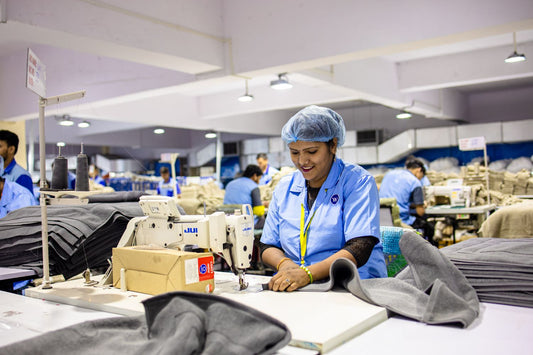
Usually 200 to 600 workers, often founded by a production manager who left a tier-1. This is the sweet spot for most growing brands and serious wholesale programs: real engineering capability, MOQs from 300 to 500, and owners who still walk their own lines daily. The variance among tier-2s is enormous, though — the difference between a great one and a mediocre one only shows up in third-party testing and in how they handle their first mistake. A good tier-2 tells you about a fabric delay before you discover it. Most of Backper's line is built in factories of exactly this type.
Factory three: the workshop
Twenty to eighty workers, quoting aggressively, hungry. Workshops can be terrific for simple constructions — totes, drawstrings, basic daypacks — and some of today's best tier-2s were yesterday's workshops. The risks are concentrated in anything complicated: bonded seams, suspended laptop compartments, load-bearing hardware. The honest rule: never give a workshop a product with a failure mode that can hurt someone's spine or laptop.
Factory four: the spot market
Then there's the trader with 8,000 units of someone's cancelled order, available now, shockingly cheap. Spot-market stock has legitimate uses — filling a one-time promotional need, testing a price point — but understand what you're buying: no spec control, no continuity, no recourse, and frequently a bag designed for another market's regulations. If it carries someone else's tooling or design DNA, that's also a legal exposure you inherit at the border, not at the warehouse.
How to tell who you're really talking to
Booth staff will claim whatever tier you seem to want. Three questions cut through. Ask for their top three customers' order sizes — not names, just volumes; the answer brackets their comfort zone. Ask what's running on their lines this week; a real factory answers in fabric and SKUs, a trader answers in generalities. And ask to video-call the sewing floor live. A tier-2 owner will do it from their phone, walking. A spot trader will schedule it for next week.
This kind of first-hand verification is exactly what international guidance recommends buyers do themselves rather than take on faith. The OECD's Due Diligence Guidance for Responsible Supply Chains in the Garment and Footwear Sector — the internationally recognized framework implementing the OECD Guidelines for Multinational Enterprises and the UN Guiding Principles on Business and Human Rights — sets out supplier identification and verification as a standing buyer responsibility, not a one-time check. It doesn't rank factory tiers the way we do above; it's a due-diligence framework, not a sourcing guide. But it backs the same instinct: knowing who's actually on the other end of your order is a buyer's job, not a courtesy the factory extends you.
None of these four is 'best.' They're tools. The buying mistakes we see — and the ones we've made ourselves — almost always come from using the right factory at the wrong stage: workshop quality at program scale, or tier-1 minimums crushing a first-run budget. Match the factory to the order you actually have, not the brand you plan to become.
The one outside reference in this piece: OECD, "Due Diligence Guidance for Responsible Supply Chains in the Garment and Footwear Sector," published 6 March 2018, checked 17 Aug. 2026 — cited as the standing due-diligence framework behind supplier verification, not as a source for our own tier definitions or the specific worker-count/MOQ ranges above, which are our own field experience.
Related reading: For the full vetting checklist we'd use if we were the buyer, see our Wholesale guide How to Choose a Wholesale Custom Backpack Supplier.
Tags:
Previous
MOQ 50 vs 500 vs 5,000: when each makes sense.
Next
Cordura® 1000D vs ballistic nylon: the abrasion shootout.
Related articles

-
Jun 03 2026
We made every pack 2mm wider. Returns dropped 18%.
-
Jun 03 2026
Northwind Outdoor: 14 stores, one private-label catalog.
-
Jun 03 2026
The strange physics of webbing under shock load.

-
Jun 03 2026