


We published our first full lifecycle assessment. Here's how we calculated every number — and what we're still not happy with.
Why we did an LCA at all
Sustainability claims in the bag industry are mostly vibes with a leaf logo. We wanted a number we could defend in a procurement meeting: what does one Backper pack actually cost the atmosphere, cradle to grave? The answer required a full lifecycle assessment — an accounting exercise that turned out to be harder, slower, and more humbling than any product launch we've run.
How the numbers were built
The assessment follows the standard cradle-to-grave structure: raw material extraction, fabric production, manufacturing, distribution, use phase, and end of life. For materials and energy we used a recognized LCA database for industry-average factors, then replaced averages with primary data wherever we could get it — actual electricity bills from our two largest factories, actual fabric compositions from mill certificates, actual freight legs from our forwarder's records rather than modeled distances.
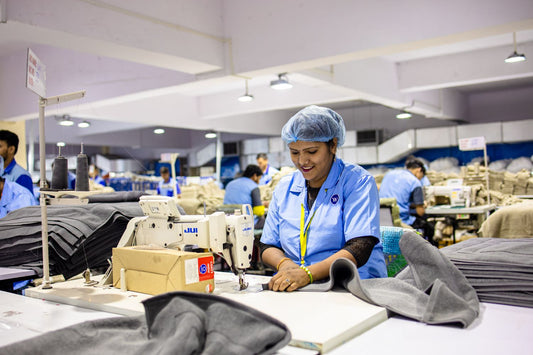
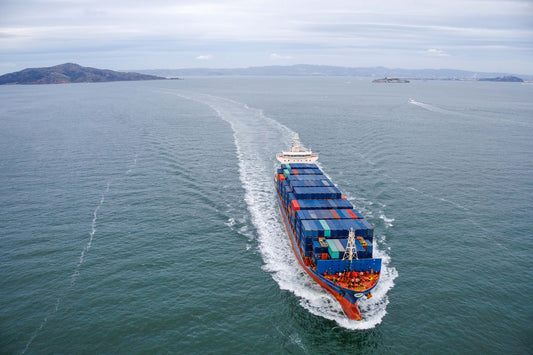
The headline result: a representative 24L Backper commuter pack accounts for roughly 24kg CO₂e across its lifecycle. The shape of that number matters more than its size. Just over half sits in materials — dominated by nylon production, which is energy-hungry no matter whose factory runs it. About a fifth is fabric finishing and lamination. Manufacturing — the cutting and sewing everyone pictures when they imagine a factory — is a single-digit slice. Ocean freight, which customers ask about most, is smaller still: moving a pack from Asia to Europe by sea adds less carbon than the polyester in its lining.
What the numbers changed
This is why we keep saying the LCA was worth it: it reordered our priorities against our intuitions. Before the assessment, the team's energy went into things like recyclable polybags and offset-friendly shipping — visible, marketable, and nearly irrelevant at two percent of footprint. The data pointed at materials, which is how the ocean-recycled rPET program went from side project to 38% of the outdoor catalog: recycled nylon and polyester cut the materials slice by roughly a third per pack. One spreadsheet column quietly redirected the whole roadmap.
What we're still not happy with
Honesty requires listing the soft spots. Our use-phase assumption — that a pack lives seven years — is an educated guess built on warranty data, and lifespan is the single most powerful variable in the whole model; a bag used ten years beats a 'greener' bag used three. Our end-of-life numbers assume disposal rates we can't verify once a bag leaves a customer's hands. Dye-house data from sub-suppliers is still industry-average rather than primary, and dyeing is exactly where averages hide sins. And we don't yet have credible numbers on microfiber shedding, because the science itself is unsettled.
We've committed to re-running the assessment annually, replacing one assumption with primary data each cycle. The 47-point factory audit now collects energy and water figures specifically to feed it.
The takeaway for buyers
If a supplier hands you a sustainability claim, ask for the boundary (cradle to what?), the functional unit (per bag? per kg?), and which numbers are primary versus database averages. Anyone who's actually done the work will answer in thirty seconds — and will usually tell you, unprompted, what they're still not happy with. That last part is how you know the report is real.
Related reading: For a first-hand look at the recycled fabric now driving our materials number down, see The case for ocean-recycled rPET. And for how this translates into a wholesale spec, see our Wholesale guide Eco-Friendly Wholesale Backpacks.
Tags:
Previous
DDP vs EXW: which Incoterm actually protects you?
Next
Six questions to ask before placing a 1,000-unit RFQ.
Related articles
-
Jun 03 2026
We made every pack 2mm wider. Returns dropped 18%.
-
Jun 03 2026
Northwind Outdoor: 14 stores, one private-label catalog.

-
Jun 03 2026
The strange physics of webbing under shock load.
-
Jun 03 2026